How to Create a Social Media Marketing Strategy in 7 Steps
|
7
min read
How to Create a Social Media Marketing Strategy in 7 Steps
Today, social media is no longer optional for businesses, it’s essential. With over 5 billion people using social platforms worldwide, your potential customers are already scrolling, searching, and engaging online. Yet, many small businesses and startups struggle to create a coherent social media marketing strategy that delivers real results. Without a clear plan, your efforts become scattered, inconsistent, and difficult to measure.
This guide is designed for MSME owners, startup founders, and marketing managers who want to build a strong digital presence without overwhelming their resources. Whether you’re launching a new business or looking to improve your current efforts, these seven steps will help you create a social media marketing strategy that aligns with your business goals and connects with your target audience.
Step 1: Define Your Goals
Before posting anything, you need to know what success looks like. A solid social media marketing strategy starts with clear, measurable objectives that align with your broader business goals.
SMART Goals Framework
Use the SMART framework to set goals that are Specific, Measurable, Achievable, Relevant, and Time-bound. Instead of saying “I want more followers,” specify “I want to gain 500 new Instagram followers in the next three months.”
Common Social Media Objectives
Brand Awareness: Increase visibility and recognition among your target audience
Lead Generation: Capture interest through forms, messages, or content downloads
Sales: Drive direct purchases or traffic to your website
Community Building: Foster loyalty and engagement with existing customers
Key Questions to Ask
What business outcome am I trying to achieve?
How will social media support my overall marketing funnel?
What timeline makes sense for my resources and goals?
Step 2: Know Your Target Audience
Understanding who you’re talking to is the foundation of any effective social media plan. Without this knowledge, even the best content will fail to resonate.
Creating Buyer Personas
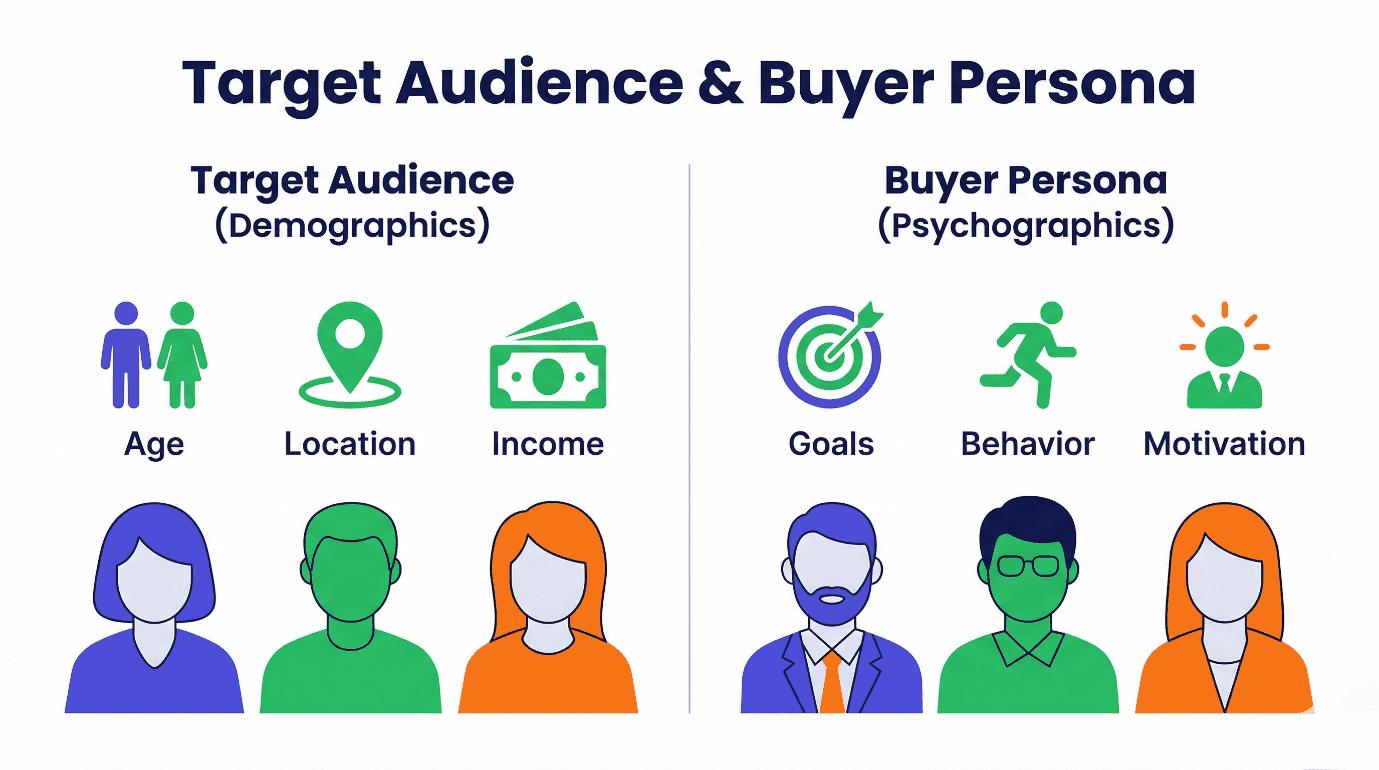
Develop detailed profiles of your ideal customers. Include their age, location, job title, and income level. Then go deeper into their interests, pain points, online behaviors, and what type of content they consume.
Demographics vs. Psychographics
Demographics tell you who your audience is: age, gender, location, and income. Psychographics tell you why they make decisions, what they value, what problems they face, and what motivates them. Both are essential for crafting messages that connect.
Where Your Audience Spends Time
Not all platforms are equal for your business. Research where your target audience spends their time online. A B2B company may find LinkedIn more effective, while a consumer brand might thrive on Instagram or TikTok.
Tools for Audience Research
Platform analytics to see who currently follows you
Social listening tools to monitor conversations about your industry
Customer surveys and interviews to gather direct feedback
Step 3: Choose the Right Platforms
With countless platforms available, spreading yourself too thin is a common mistake. Focus on quality over quantity to maximize your impact.
Platform Overview
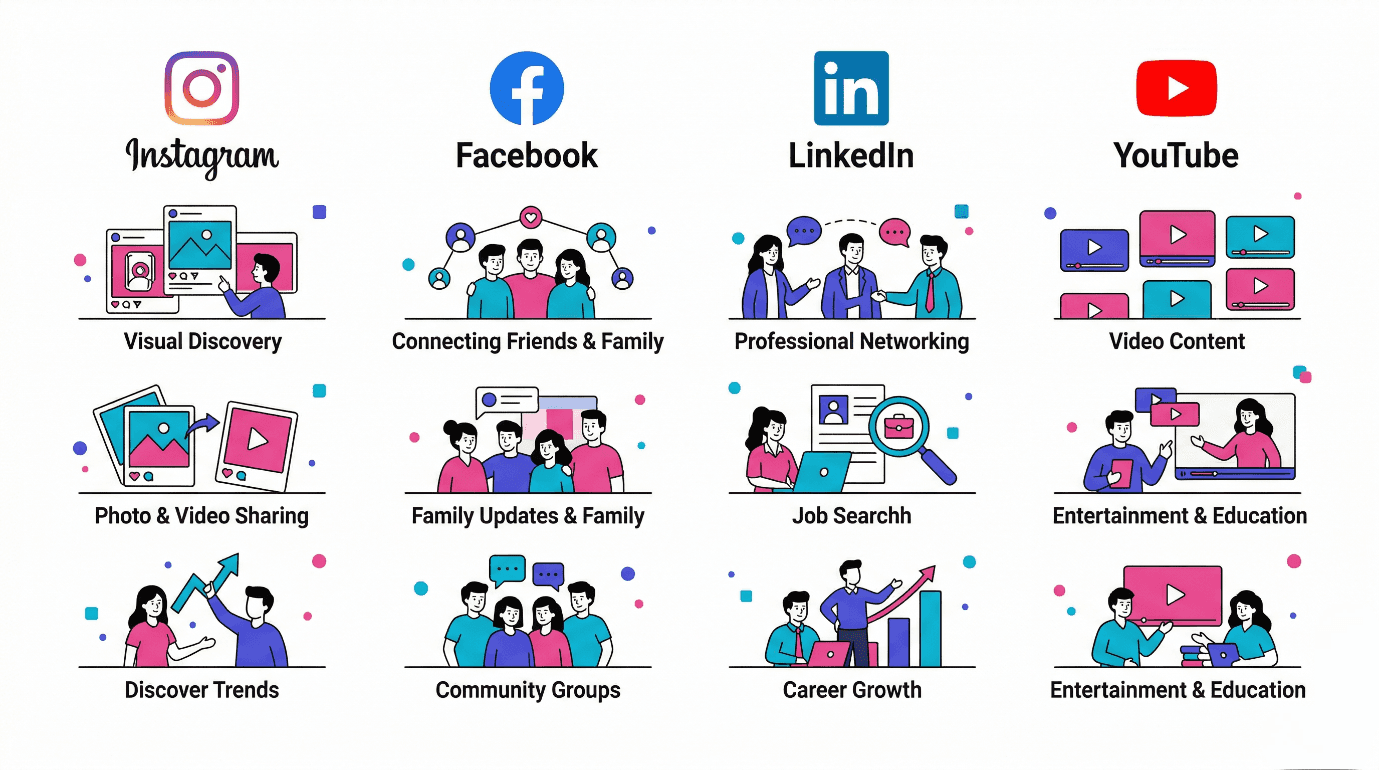
Instagram: Visual content, stories, reels, and shopping features, ideal for lifestyle brands, e-commerce, and creative businesses
Facebook: Broad audience reach, groups, and marketplace, useful for local businesses and community building
LinkedIn: Professional networking, thought leadership, and B2B marketing
TikTok: Short-form video content, viral potential, and younger demographics
X (Twitter): Real-time updates, customer service, and news-oriented brands
YouTube: Long-form video content, tutorials, and brand storytelling
Google Business Profile (GBP): Local search visibility, customer reviews, and maps discovery, ideal for businesses targeting nearby customers
How User Behavior Differs by Platform
Each platform has a unique user mindset. On Instagram and TikTok, users are typically in discovery and entertainment mode, scrolling quickly through content. LinkedIn users are more intent-driven, looking for professional insights and networking opportunities. Facebook focuses on community engagement and conversations, while YouTube audiences prefer in-depth, long-form content. Google Business Profile users often have high purchase intent, searching for local businesses, reviews, and directions. Understanding these behavior patterns helps you tailor your content to match user expectations on each platform.
Platform Selection Criteria
Choose platforms based on where your target audience spends time and where your content strengths lie. A restaurant may prioritize Instagram and Facebook, while a SaaS company might focus on LinkedIn and YouTube.
Quality Over Quantity
It’s better to excel on two or three platforms than to have a weak presence on seven. Master your chosen channels before expanding.
Step 4: Create Compelling Content
Content is the vehicle for your message. Without valuable, engaging content, your strategy won’t gain traction.
Content Types to Consider
Short-form video (reels, TikToks)
High-quality images and graphics
Carousel posts for tutorials or product showcases
Stories for behind-the-scenes content
Blog posts and articles
User testimonials and case studies
Content Pillars Framework
Establish three to five content pillars that represent the main themes you will consistently share. For example, a fitness brand might use pillars like workout tips, nutrition advice, product highlights, customer success stories, and motivational content.
Balancing Promotional and Value-Added Content
Follow the 80/20 rule: 80% of your content should provide value, entertainment, education, or inspiration, while only 20% directly promotes your products or services. This builds trust and prevents audience fatigue.
Visual Branding Consistency
Use consistent colors, fonts, and visual styles across all your posts. This strengthens brand recognition and makes your content look professional and cohesive.
Step 5: Build a Content Calendar
Consistency is key in social media. A content calendar helps you plan, organize, and schedule your posts in advance.
Why Planning Matters
A content calendar ensures you’re posting regularly, aligns your content with business events and campaigns, and prevents the last-minute scramble for ideas.
What to Include in Your Calendar
Post date and time
Platform for each post
Content type and format
Caption and key messaging
Links and hashtags
Visual assets and graphics
Frequency Recommendations
Instagram: 3-5 posts per week, plus daily stories
Facebook: 1-2 posts daily
LinkedIn: 2-5 posts per week
TikTok: 3-5 videos per week
X: Multiple daily tweets for active accounts
Scheduling Tools
Use tools like Buffer, Hootsuite, Later, or native platform schedulers to automate your posting and save time. For an AI-powered solution that combines content planning with smart scheduling, explore the AI Content Calendar feature (https://sociali.ai/feature/calendar), which helps you plan, create, and schedule content all in one place.
Sociali.ai also offers an integrated solution to plan, create, and schedule content without needing multiple tools.
Step 6: Engage and Interact
Social media is a two-way conversation. Building a loyal community requires active engagement, not just broadcasting content.
Community Management Basics
Respond promptly to comments, messages, and mentions. Show your audience that there’s a real person behind the brand who cares about their questions and feedback.
Responding Effectively
Thank customers for positive comments
Address concerns professionally and privately when needed
Ask follow-up questions to keep conversations going
Acknowledge user-generated content and tag the creators
Building Relationships
Engage with your followers’ content, collaborate with other brands or influencers, and participate in relevant conversations. This humanizes your brand and fosters loyalty.
User-Generated Content Strategies
Encourage customers to share their experiences with your products. Repost their content (with permission) to build social proof and authenticity.
Step 7: Measure and Optimize
What gets measured gets improved. Tracking your results helps you understand what’s working and where to adjust.
Key Metrics to Track
Reach and impressions (how many people see your content)
Engagement rate (likes, comments, shares, saves)
Follower growth over time
Website traffic from social media
Conversions and leads generated
Customer acquisition cost
Analytics Tools Overview
Most platforms offer free analytics through their native insights. For a unified view with deeper insights, consider Sociali.ai Analytics dashboard, which provides comprehensive performance tracking, goal setting, and scheduled reports to keep your team informed.
A/B Testing Strategies
Test different content formats, posting times, captions, and visuals to see what resonates most. Change one variable at a time to isolate what drives better results.
Continuous Improvement Process
Review your metrics weekly or monthly. Identify patterns, learn from mistakes, and refine your strategy based on data, not assumptions.
Conclusion: Start Building Your Strategy Today
Creating a social media marketing strategy doesn’t happen overnight, but you can begin today by following these seven steps:
Define clear, measurable goals
Research and understand your target audience
Choose the right platforms for your business
Develop compelling, value-driven content
Plan and schedule with a content calendar
Engage actively with your community
Measure results and optimize continuously
Start small, stay consistent, and scale as you learn what works for your specific audience. The businesses that succeed on social media are those that treat it as a long-term investment, not a quick fix.
Ready to streamline your social media management? Visit sociali.ai to start planning, scheduling, and growing your social media presence more efficiently today.
Free resource
Get the checklist


