How to Improve & Measure Social Media Engagement in 2026
|
7
min read
How to Improve & Measure Social Media Engagement in 2026
Introduction
Social media engagement has evolved dramatically heading into 2026. In fact, most content today fails within the first few seconds—not because it lacks quality, but because it lacks a strong hook.
What worked in 2024, such as basic posting schedules and generic content, no longer cuts through the noise of algorithm-driven feeds. For MSME owners, social media managers, digital marketers, and content creators, understanding how to improve social media engagement and accurately measure results is now essential for business growth.
This guide explores practical strategies to increase audience interaction while helping you track performance using data-driven methods.
Why Engagement Matters in 2026
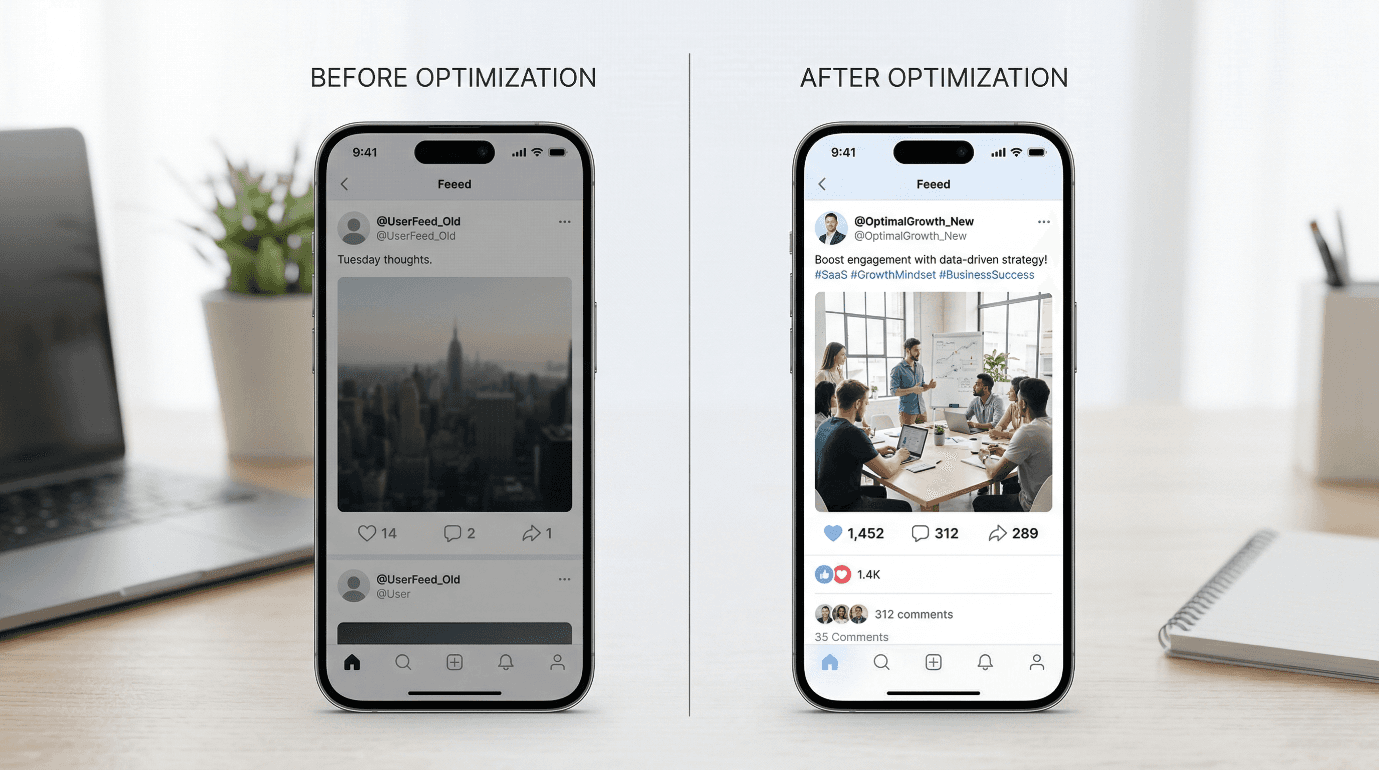
Social platforms have fundamentally changed how content reaches audiences. Today, algorithms prioritize engagement velocity—how quickly users interact with your content after it’s published. This means posts that generate immediate reactions are more likely to be pushed to a wider audience.
At the same time, quality has overtaken quantity. A post with fewer views but meaningful interactions such as comments, shares, and saves will outperform content that attracts passive impressions.
This shift has a direct business impact. Studies show that engaged users are significantly more likely to convert into customers, making engagement one of the most important drivers of growth.
What Actually Drives Engagement in 2026
In 2026, engagement is no longer accidental—it’s engineered. The most successful content starts with a strong hook that captures attention within the first three seconds. Without this, even high-quality content gets ignored.
Equally important is creating content that sparks curiosity, emotion, or relatability. Users engage more when they feel connected to the message or see direct value in it. Clear calls-to-action also play a major role, guiding users on what to do next—whether that’s commenting, sharing, or saving the post.
How to Improve Social Media Engagement
One of the most effective ways to increase engagement is by creating interactive content. Instead of static posts, brands are now using polls, question-based captions, and carousel formats that encourage users to participate rather than just consume.
Another critical factor is response management. Engagement doesn’t end when you post—it continues in the comments and messages. Responding quickly, especially within the first hour, signals activity to the platform and encourages more interaction from your audience.
Video content continues to dominate engagement across platforms. Short-form videos, when combined with strong hooks and clear messaging, consistently outperform static images. Adding captions and including a clear call-to-action further improves performance.
Posting at the right time also plays a role. While general benchmarks exist, the most effective approach is to analyze your own audience behavior and refine your posting schedule accordingly.
User-generated content is another powerful strategy. By sharing content created by your audience, you not only reduce content creation effort but also build trust and community.
How to Measure Social Media Engagement
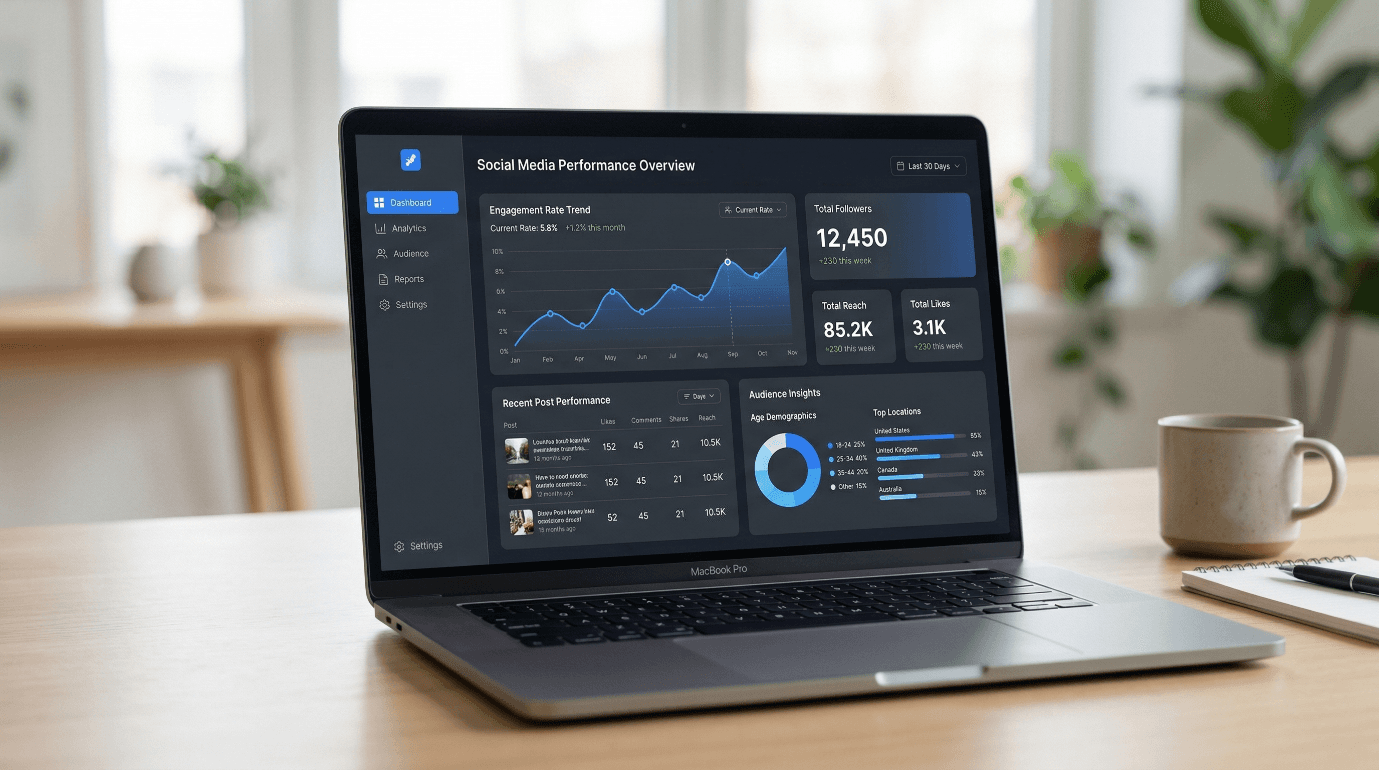
Improving engagement requires consistent measurement. The most important metric to track is engagement rate, which calculates total interactions relative to reach. This gives a clearer picture than follower count alone.
Other important indicators include saves, shares, and engagement per post, all of which signal how valuable your content is to your audience. Secondary metrics such as profile visits, click-through rates, and follower growth also provide useful insights when analyzed alongside engagement data.
Each platform offers its own analytics tools, allowing you to track performance and identify trends. For deeper insights, tools like Google Analytics can help connect engagement to actual business outcomes.
Leveraging Sociali.ai for Strategy
Managing engagement manually can become overwhelming as your content scales. Tools like Sociali.ai help simplify this process by providing content suggestions, basic analytics insights, and scheduling support.
However, it’s important to note that some advanced features, such as sentiment analysis or drag-and-drop scheduling, may not yet be available. As a result, combining tools with manual engagement remains the most effective approach.
Engagement Benchmarks by Platform
Understanding benchmarks helps set realistic expectations.
On Instagram, engagement rates typically range between 1.5% and 3%, with smaller accounts often achieving 4–8%. Video content consistently drives higher interaction compared to static posts.
On Facebook, engagement rates are lower overall, averaging between 0.07% and 0.15%, though live content tends to generate significantly more interactions.
On LinkedIn, engagement rates usually fall between 2% and 5%, with content that delivers professional value or insights performing best.
These benchmarks provide guidance, but your focus should always be on improving your own performance over time rather than comparing directly with industry averages.
Tips for Sustained Engagement Growth
Long-term success on social media comes from consistency rather than occasional viral moments. Brands that post regularly with high-quality content tend to see more stable and predictable growth.
Planning your content in advance helps maintain consistency while still allowing flexibility to respond to trends. At the same time, experimenting with different formats, captions, and posting times through A/B testing can reveal what resonates most with your audience.
Regularly reviewing your analytics ensures that your strategy continues to evolve. By identifying what works and scaling those efforts, you can steadily improve engagement over time.
Conclusion
Improving and measuring social media engagement in 2026 requires a balance between creativity and data. Success comes from capturing attention quickly, delivering value consistently, and making informed decisions based on performance insights.
Rather than chasing trends alone, focus on building meaningful interactions with your audience. Over time, these small, consistent efforts compound into significant growth.
Key Takeaways
Focus on engagement rather than follower count
Use strong hooks to capture attention early
Prioritize video and interactive content
Engage actively with your audience
Track performance and refine your strategy consistently
Your Next Steps
Start by auditing your current engagement rates and identifying gaps in your content strategy. Introduce one interactive format this week and begin tracking performance more closely.
Small improvements, applied consistently, will lead to long-term success. In 2026, brands that focus on engagement don’t just grow - they build lasting digital influence.
Free resource
Get the checklist


