Social Media Automation Mistakes to Avoid in 2026 (Most Brands Get This Wrong)
|
11
min read

Social Media Automation Mistakes to Avoid in 2026 (Most Brands Get This Wrong)
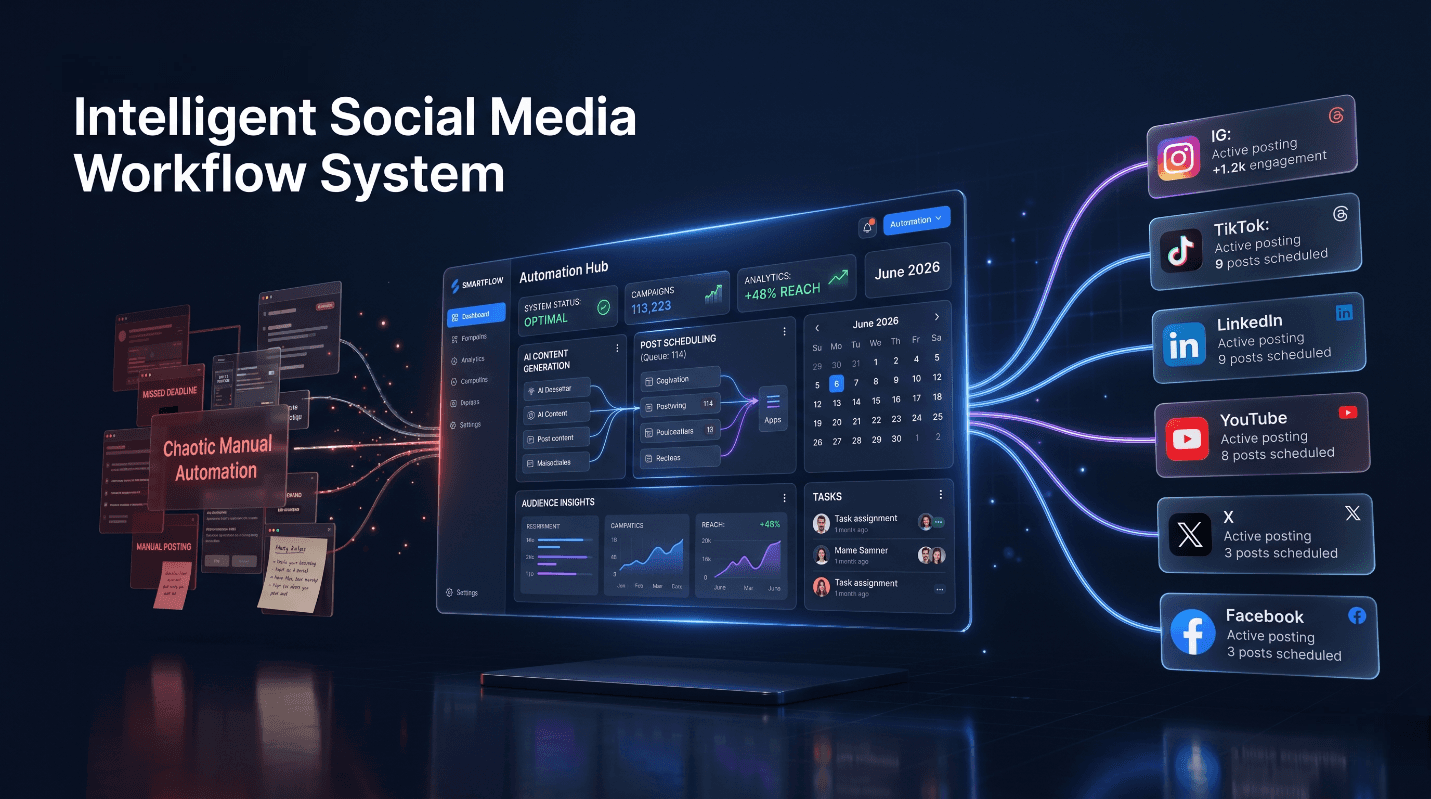
You’ve got tools scheduled. You’ve got tools queued. Maybe you’ve even got AI drafting captions while you sleep. On paper, your social media operation looks dialed in.
But scroll through your analytics and something doesn’t add up. Engagement is flat. Follower growth has stalled. The content is going out but nothing feels like it’s landing.
This is the reality for a growing number of brands in 2026. As automation tools become cheaper and easier to access, more teams are using them. But more automation hasn’t translated into better results. If anything, a lot of brands are getting noisier while becoming less effective.
The problem usually isn’t automation itself, it’s how brands implement it.
Why Most Automation Systems Fail in 2026
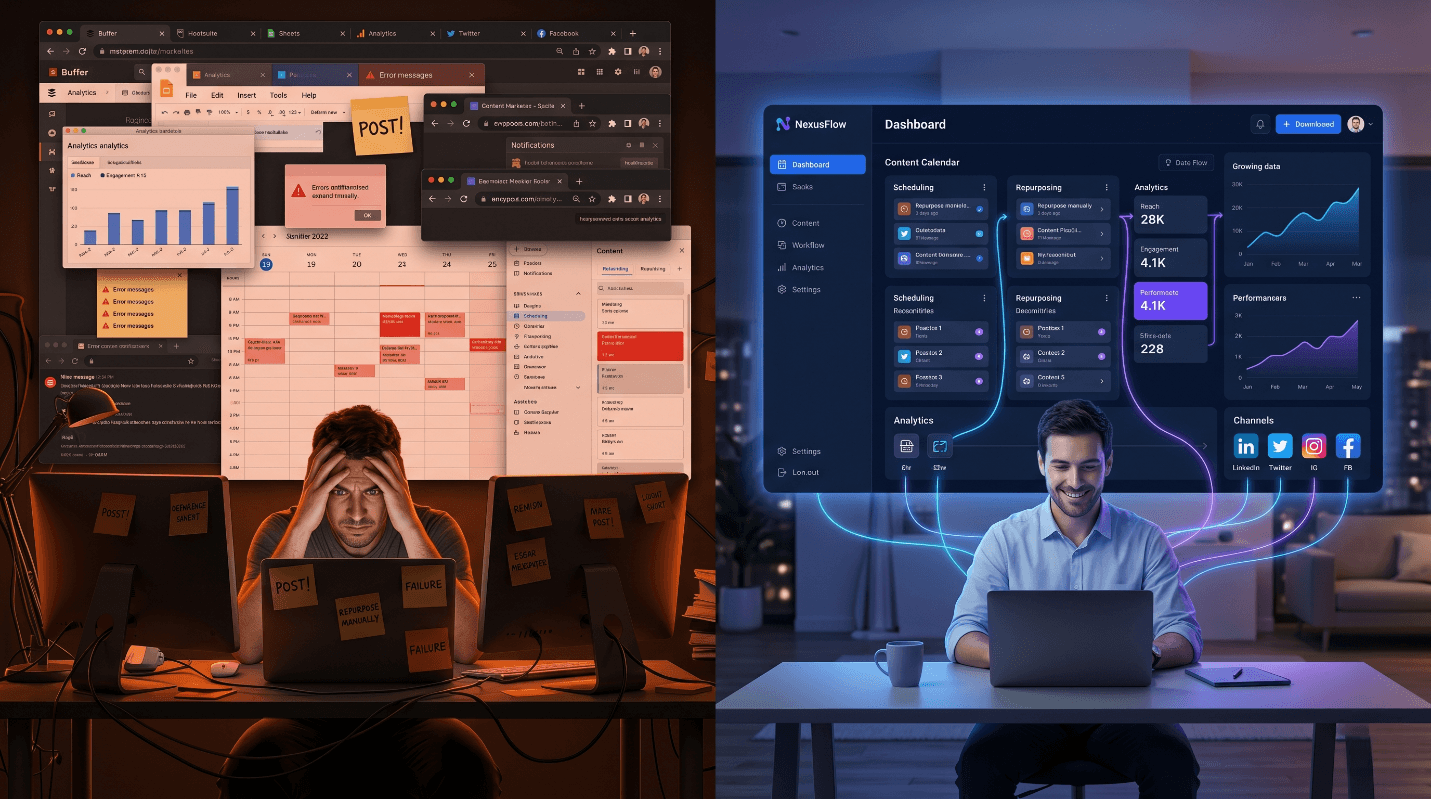
Here’s the honest picture: most automation setups are just a collection of tools bolted together with no real strategy underneath.
Someone signs up for a scheduling tool. Then adds a separate analytics platform. Then tacks on an AI writing assistant. Three months later, the workflow is a mess of logins, inconsistent data, and content that performs terribly because nobody’s actually connecting the dots.
The core problems tend to look like this:
Disconnected tools that don’t talk to each other
Over-automation posting so frequently the content quality tanks
No workflow strategy, so the team operates on vibes instead of a system
Chasing volume over outcomes, which means more content, less impact
The brands that actually win with automation aren’t the ones using the most tools. They’re the ones that built a clean, connected workflow first.
The Biggest Social Media Automation Mistakes to Avoid in 2026
Mistake 1: Automating Without a Content Strategy
This is the root cause of most automation failures. Teams get excited about scheduling tools and start queuing content before they’ve answered basic questions: Who is this for? What are we trying to achieve? What does success actually look like?
Why it hurts: Automation amplifies whatever you put into it. If your strategy is vague, you’ll just be publishing vague content at scale.
What smart teams do: Strategy comes first, always. That means understanding the audience, mapping content to business goals, and defining what engagement or conversion actually means before a single post gets scheduled.
Mistake 2: Posting the Same Content Everywhere
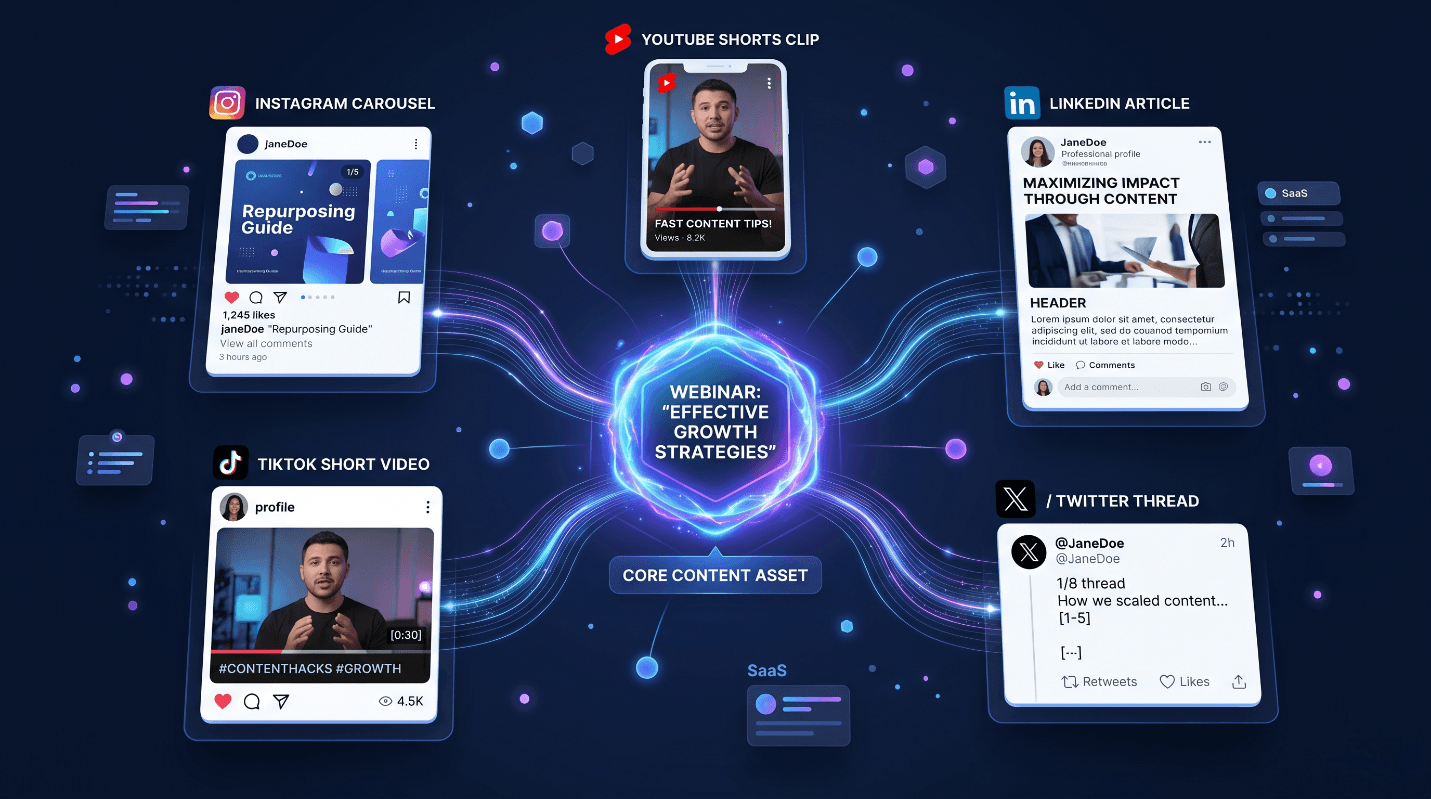
Copy-pasting the same post across Instagram, LinkedIn, X, and TikTok is one of the most common and most damaging automation mistakes. Each platform has its own culture, format expectations, and algorithm behaviour.
Why it hurts: Platform audiences can tell when content wasn’t made for them. LinkedIn users don’t want hashtag-heavy Instagram captions. TikTok audiences don’t want corporate press-release copy.
What smart teams do: They build a strong content repurposing strategy. One idea becomes multiple formats: a LinkedIn article becomes a short-form video clip, a tweet thread, and an Instagram carousel. The core message stays consistent; the execution is platform-native.
Mistake 3: Ignoring Analytics and Performance Signals
Automation makes it easy to set a content schedule and forget about it. But if you’re not checking what’s working, you’re flying blind.
Why it hurts: You end up doubling down on content types that don’t resonate and underusing the formats that actually drive results.
What smart teams do: They build social media analytics reviews into their regular workflow — not as a monthly afterthought, but as a weekly or bi-weekly habit. They look for patterns: which formats drive saves and shares? Which content times outperform? Which topics lead to actual clicks or conversions?
Mistake 4: Scheduling Too Far Ahead Without Adapting
Scheduling six weeks of content in advance sounds efficient. Until a major news story breaks, your industry has a moment of crisis, or an algorithm shifts and your pre-scheduled content suddenly feels tone-deaf or irrelevant.
Why it hurts: Rigid scheduling makes brands look unaware and disconnected from what’s happening in the world.
What smart teams do: They balance evergreen scheduled content with room for real-time reactive content. They review queued posts regularly and build in flexibility to pull, swap, or update content when the context changes.
Mistake 5: Treating Automation Like a Replacement for Creativity
AI-generated captions. Auto-scheduled posts. Templated content. Used well, these are powerful tools. Leaned on too heavily, they produce content that feels generic, soulless, and completely forgettable.
Why it hurts: Audiences are more sophisticated than ever. They can spot templated content immediately and they scroll past it.
What smart teams do: Automation handles the operational layer scheduling, distribution, repurposing. Creativity still requires human input. The best-performing brands use AI and automation to save time on execution, then reinvest that time into stronger ideas, better angles, and smarter storytelling.
Mistake 6: Using Too Many Disconnected Tools
The average social media team in 2025 used between five and seven different tools to manage content. Scheduling in one place, analytics in another, creative production elsewhere, and reporting done manually in a spreadsheet.
Why it hurts: Context gets lost between platforms. Data doesn’t match up. Time gets wasted on admin instead of strategy. And when something breaks, nobody knows which tool is responsible.
What smart teams do: They consolidate. Platforms like Sociali.ai simplify this by bringing planning, scheduling, and analytics into one workflow so teams spend less time managing tools and more time using insights to make better content decisions.
Mistake 7: Automating Engagement in Unnatural Ways
Auto-DMs that feel robotic. Scheduled comments that land at the wrong moment. Engagement pods that fool nobody. These shortcuts backfire, hard.
Why it hurts: Forced engagement damages brand trust. Audiences notice when responses feel automated or out of context and so do platform algorithms, which are increasingly good at detecting low-quality engagement signals.
What smart teams do: They automate distribution, not conversation. Real engagement replies, comments, meaningful interactions stay human. Automation handles the logistics; the relationship-building stays authentic.
Mistake 8: Measuring Vanity Metrics Instead of Business Results
Likes, follower counts, impressions these feel good on a dashboard but rarely tell you anything meaningful about business performance.
Why it hurts: Teams optimise for the wrong signals. They celebrate posts that got a lot of likes but drove zero traffic, zero leads, and zero revenue.
What smart teams do: They define what success looks like in business terms before they start measuring. That might be link clicks, email signups, demo bookings, or direct revenue. Then they track social media analytics with those outcomes in mind, not just surface-level engagement.
What High-Performing Social Media Teams Do Differently in 2026
The teams seeing real results from automation aren’t grinding harder; they’re operating smarter. A few consistent patterns stand out:
Systems over hustle. They’ve built repeatable workflows so content production doesn’t depend on individual heroics or last-minute scrambles.
Workflows over random posting. Every piece of content has a purpose and fits into a broader content workflow system from ideation through to analytics review.
Adaptability over rigid scheduling. They plan ahead but build in room to respond to what’s happening in real time.
Analytics-driven decisions. Performance data shapes what they create next, not just what worked six months ago.
Platform-native content. They understand that adapting content per platform isn’t optional, it’s the price of admission for meaningful reach.
The cleanest version of this is what’s often called an end-to-end social media automation workflow — a connected system where planning, publishing, repurposing, and analytics all feed back into each other. That loop is what separates brands that grow consistently from those that just post consistently.
Frequently Asked Questions
What is social media automation?
Social media automation refers to using tools and software to schedule, publish, and manage social media content without manual intervention for every post. This includes scheduling platforms, AI-assisted content creation, analytics dashboards, and workflow management tools.
What are the biggest social media automation mistakes?
The most common mistakes include automating without a content strategy, posting identical content across every platform, ignoring analytics, scheduling too rigidly, and using too many disconnected tools. The result is usually content that looks active but performs poorly.
Is social media automation bad for engagement?
Automation itself doesn’t hurt engagement but poor implementation does. When automation is used to distribute relevant, platform-native content and free up time for genuine human interaction, it improves efficiency without sacrificing quality. The mistake is automating the human parts, like replies and conversations.
How often should automation workflows be updated?
At minimum, quarterly. In practice, high-performing teams review workflows monthly and check analytics at least bi-weekly. Platforms change, audiences shift, and what worked three months ago may not be the right approach today.
What tools help automate social media workflows?
The most effective setups combine scheduling, analytics, and content management in as few platforms as possible. Sociali.ai, for example, brings these into a single workflow reducing tool sprawl and making it easier to act on performance data in real time.
How do brands automate content without losing authenticity?
By keeping automation focused on the operational layer scheduling, distribution, repurposing while keeping content ideation, creative direction, and audience engagement genuinely human. A strong content repurposing strategy also helps: one well-crafted idea, adapted thoughtfully across platforms, always outperforms bulk-generated content pushed everywhere at once.
Build the System, Then Let It Run
Automation is one of the most powerful levers available to social media teams right now. But a lever only works if it’s connected to something real.
If your workflow feels chaotic if content is going out but results aren’t coming back the problem usually isn’t the volume of content. It’s the system, or lack of one, behind it.
The fix isn’t doing more. It’s building a cleaner, more connected operation where strategy, scheduling, and analytics all talk to each other. When that loop works, automation becomes a genuine growth engine instead of just a way to stay busy.
Platforms like Sociali.ai are built for exactly this, giving teams a single place to plan, publish, and measure without the tool sprawl and data gaps that slow most automation setups down.
Start with the system. The results follow.
Free resource
Get the checklist


