Healthcare Brand Marketing: The Complete Guide to Growing a Trusted Healthcare Brand
|
9
min read

Healthcare Brand Marketing: The Complete Guide to Growing a Trusted Healthcare Brand
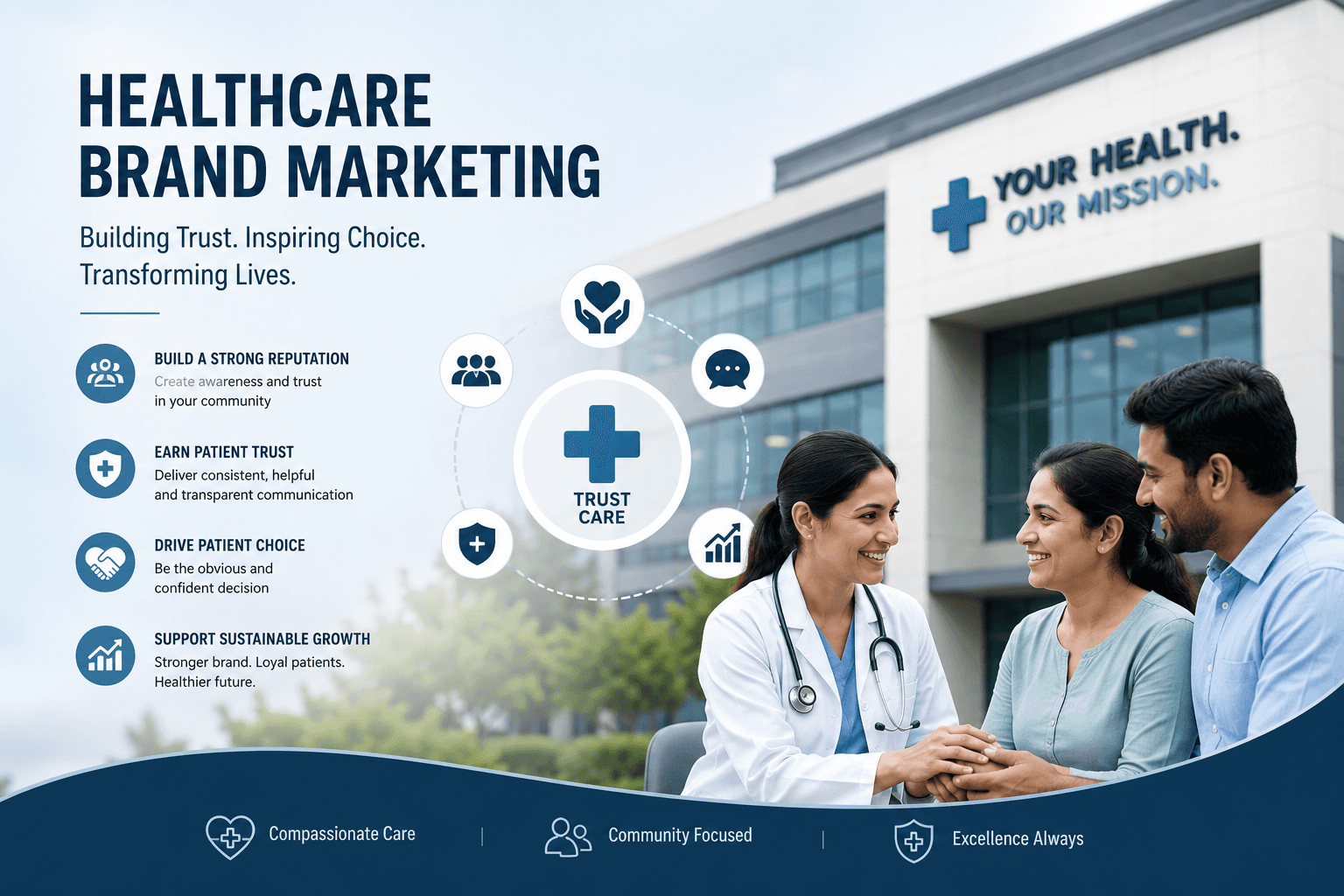
A patient needs a specialist. They search online, ask friends, and scan reviews. Three names come up repeatedly. One stands out. Not because the patient verified clinical outcomes or compared surgical complication rates. They do not have the training to evaluate those things. The name stands out because the organization has built familiarity through consistent, helpful presence in the community. The patient books with confidence.
That moment, the instant when someone chooses your organization because your brand feels like the obvious, safe decision, is what healthcare brand marketing exists to create.
Healthcare brand marketing is the strategic work of building awareness, shaping perception, and creating the trust that drives patient choice. It connects organizational identity to the patients and communities who need your care. This guide covers how to build a healthcare brand marketing strategy that attracts patients, strengthens loyalty, and supports sustainable growth.
Key Takeaways
Healthcare brand marketing is the strategic discipline of communicating organizational identity and value to build awareness, trust, and preference among patients and communities.
Brand marketing differs from service marketing. Service marketing promotes specific offerings. Brand marketing builds the reputation foundation that makes all service marketing more effective.
Healthcare branding establishes organizational identity. Brand marketing communicates that identity consistently across every channel and patient touchpoint.
The most effective healthcare brand marketing prioritizes patient education and community value over organizational promotion. Patients engage with content that serves their needs.
Healthcare digital marketing channels including content, social media, search, email, and video each contribute distinct value to brand building efforts.
Brand consistency across multiple locations requires centralized standards with localized implementation. Patients expect consistent experience regardless of which facility they visit.
Brand marketing measurement must connect awareness and perception to patient acquisition and organizational growth. Impressions matter less than appointments and patient choice.
What Healthcare Brand Marketing Actually Means
Healthcare brand marketing is the strategic practice of communicating organizational identity, values, and differentiation to build awareness, shape perception, and create patient preference. It encompasses every marketing activity that contributes to how patients and communities perceive your organization.
This definition distinguishes brand marketing from service line marketing. Service line marketing promotes specific offerings. An orthopedic campaign driving joint replacement consultations. A cardiology campaign promoting heart health screenings. These campaigns drive immediate patient actions. Brand marketing builds the reputation foundation that makes those campaigns more effective. When patients already know and trust your organization, service marketing converts at higher rates with lower investment.
The definition also clarifies that brand marketing is not brand identity. Brand identity is what you define internally. Your purpose, values, positioning, and visual standards. Brand marketing is how you express that identity externally to build the awareness and perception that drive patient choice.
Understanding these distinctions matters because many healthcare organizations underinvest in brand marketing relative to service marketing. They promote services constantly while building minimal brand awareness or trust. This creates an expensive marketing operation that must overcome skepticism with every campaign because no reputation foundation exists.
Why Healthcare Brand Marketing Matters
Healthcare decisions involve significant trust and vulnerability. Patients cannot evaluate clinical quality directly. They rely on reputation signals. Brand marketing shapes those signals.
When your organization has invested in brand marketing, prospective patients encounter your name with positive associations already established. They have seen your educational content. They have engaged with your social media presence. They have heard positive things from community members who follow your work. By the time they need care, you are not an unknown entity requiring evaluation. You are the familiar, trusted option.
This brand familiarity creates measurable advantages. Patient acquisition cost decreases because less marketing investment is required to convert interest into appointments. Conversion rates improve because trust reduces the anxiety that prevents booking. Patient retention strengthens because brand loyalty influences decisions when new health needs arise. Word-of-mouth referrals increase because patients recommend organizations they feel connected to.
Brand marketing also supports organizational objectives beyond patient acquisition. Strong brands attract clinical talent in competitive recruitment markets. They strengthen payer negotiations. They provide resilience during reputation challenges. They support the community relationships that influence bond ratings, philanthropic support, and regulatory relationships.
The Brand Marketing Foundation
Effective brand marketing rests on clear strategic foundations. Here is how to build them.
Define Brand Identity Before Marketing It
You cannot market an identity you have not defined. Brand identity establishes who you are as an organization. Your purpose. Your values. Your positioning relative to alternatives. Your distinctive voice and personality.
Brand purpose is why your organization exists beyond generating revenue. It is the contribution you make to patient health and community wellbeing. Effective purpose is specific enough to guide decisions. "Improving health" is too broad. "Ensuring every family in our community has access to exceptional pediatric care regardless of their ability to pay" is specific enough to guide resource allocation and communication priorities.
Brand values are the principles guiding organizational behavior. The specific values matter less than genuine commitment to living them. Values that appear in marketing materials but not in daily operations damage credibility more than having no stated values.
Brand positioning defines how you want patients to perceive you relative to alternatives. It identifies a meaningful difference that matters to patients and that your organization can credibly deliver. Clinical leadership in specific specialties. Exceptional patient experience. Unmatched access and convenience. Deep community commitment.
Document these brand identity elements clearly. They become the foundation for all brand marketing activities. Every campaign, every piece of content, every patient communication should express this identity consistently.
Understand Your Audiences
Brand marketing must reach specific audiences with messages that resonate. Different patient groups have different needs, preferences, and decision processes.
Define priority patient audiences. New families seeking pediatric care. Adults managing chronic conditions. Seniors evaluating Medicare options. Women making obstetric and gynecologic decisions. Each audience needs different information delivered through different channels with different messaging.
Understand how each audience makes healthcare decisions. What information do they seek? Where do they look for it? What concerns and anxieties influence their choices? What does trust mean to them?
This audience understanding guides every brand marketing decision. Channel selection. Content development. Messaging approach. Campaign timing. Creative execution.
Brand Marketing Channels and Strategies
Different channels serve different brand marketing purposes. Here is how each contributes.
Content Marketing
Content marketing is the most powerful brand marketing tool available to healthcare organizations. Educational content demonstrates expertise. Helpful content builds trust. Consistent content creates the familiarity that drives patient choice.
Effective healthcare brand content addresses real patient questions and concerns. Blog posts answering common health questions. Educational videos explaining conditions and treatments. Downloadable guides for specific health situations. Interactive tools that help patients understand their health.
Content should lead with patient value rather than organizational promotion. The content that builds strongest brand perception is content that serves patient needs without obvious marketing intent. When patients find your content helpful during health research, they develop positive brand associations that influence future provider choice.
For organizations building content marketing capabilities, the healthcare content marketing guide covers content strategy and development frameworks.
Social Media Marketing
Social media provides daily brand marketing opportunities. It reaches patients where they spend time. It enables ongoing relationship building rather than one-time impressions.
Brand marketing through social media includes educational content that demonstrates expertise. Provider features that build familiarity and humanize your organization. Community engagement that shows values in action. Behind-the-scenes content that makes large institutions feel accessible. Interactive content that invites participation and conversation.
Consistency matters enormously. Organizations that maintain consistent, valuable social media presence build brand familiarity through repeated positive exposure. Organizations that post sporadically or abandon platforms signal disorganization that undermines brand perception.
For organizations building social media brand presence, the healthcare social media marketing guide covers platform strategies and content approaches.
Search Marketing and SEO
Search engine optimization supports brand marketing by ensuring patients find your organization when searching for health information and provider options.
Brand marketing through search includes optimizing for branded search terms so patients searching your name find positive, controlled content. Creating educational content that ranks for health information searches, building brand awareness during research phases. Managing local search presence so patients searching for nearby providers encounter your organization prominently.
Search visibility contributes to brand perception. Organizations that appear prominently in health search results are perceived as more authoritative and trustworthy than those that do not.
Email Marketing
Email nurtures brand relationships with patients who have already expressed interest. It maintains presence between visits. It provides ongoing value that strengthens brand connection.
Brand-building email includes educational content relevant to patient interests. Organizational updates that demonstrate progress and values. Provider introductions that build familiarity. Health tips and preventive care reminders that demonstrate ongoing commitment to patient wellbeing.
Email segmentation improves relevance. Different patient groups receive content matched to their specific interests and needs. Relevant email strengthens brand perception. Irrelevant email damages it.
Video Marketing
Video builds brand trust faster than any other format. Seeing and hearing providers creates connection that reading about them cannot match.
Brand marketing video includes provider introductions and features. Educational content explaining conditions and treatments. Patient stories that demonstrate outcomes and compassion. Behind-the-scenes content showing organizational culture. Community event coverage demonstrating local commitment.
Production quality matters less than authenticity. Professionally produced video that feels impersonal underperforms authentic video that shows real providers communicating genuinely.
Paid Advertising
Paid brand advertising accelerates awareness while organic channels build momentum. It reaches audiences who would not encounter your brand through search or social media alone.
Brand advertising includes display advertising building awareness in specific geographic areas. Social media advertising reaching targeted demographic groups. Search advertising capturing brand-related searches. Video advertising building emotional connection through storytelling. Retargeting maintaining brand presence with previous website visitors.
The key to effective brand advertising is balancing reach and frequency with cost efficiency. Broad reach without sufficient frequency fails to build memory. High frequency to small audiences wastes budget. Measurement should track brand awareness and perception shifts rather than immediate conversion.
Brand Marketing Campaigns
Campaigns concentrate brand marketing resources around specific objectives and timeframes. They create focused impact that ongoing marketing activities complement.
Health awareness campaigns connect your brand to important health topics. Heart Health Month campaigns for cardiology programs. Breast Cancer Awareness Month campaigns for imaging services. Mental Health Awareness Month campaigns for behavioral health services.
Community engagement campaigns demonstrate organizational commitment to community wellbeing. Free screening events. Health education workshops. Community partnership initiatives. These campaigns build brand perception as a community asset rather than just a healthcare provider.
Service line brand campaigns build awareness for specific organizational capabilities. Introducing a new specialty program. Expanding access to care. Highlighting distinctive clinical expertise.
Effective campaigns have clear objectives, defined target audiences, consistent messaging across channels, and measurement frameworks that track both awareness and action outcomes.
Brand Consistency Across Channels and Locations
Brand marketing must maintain consistency across every channel and location. Inconsistent brand presentation fragments perception and reduces trust.
Multi-Channel Consistency
Patients should recognize your brand whether encountering it through search results, social media, email, or advertising. Visual identity should be consistent. Brand voice should be recognizable. Quality standards should be maintained across channels.
This requires documented brand guidelines covering visual identity, voice, and messaging. Training for everyone creating brand content. Regular auditing to identify inconsistencies.
Multi-Location Consistency
Health systems with multiple facilities face additional complexity. Each location serves a distinct community. Yet all must express consistent brand identity.
Centralized brand standards with localized implementation flexibility provides the solution. Central marketing establishes guidelines and provides approved resources. Local teams implement within those guidelines for their specific communities.
For organizations managing brand across multiple locations, the multi-location social media management guide covers operational frameworks for maintaining consistency.
Measuring Brand Marketing Performance
Brand marketing measurement connects investment to organizational outcomes.
Brand Awareness Metrics
Track unaided and aided brand awareness in your service area. Measure share of voice compared to competitors. Monitor branded search volume trends. Track social media mentions volume and sentiment.
These metrics indicate whether brand marketing is building the awareness foundation necessary for patient acquisition.
Brand Perception Metrics
Measure what attributes patients associate with your brand. Clinical quality. Compassionate care. Innovation. Community commitment. Accessibility.
Perception research reveals whether brand positioning is landing as intended and whether marketing messages are shaping perception effectively.
Patient Acquisition Metrics
Track new patient volume trends. Measure patient acquisition cost over time. Monitor conversion rates from brand-aware audiences. Assess patient retention and loyalty patterns.
These metrics connect brand marketing investment to revenue impact. They demonstrate whether brand building produces patient choice behavior.
Common Healthcare Brand Marketing Mistakes
Promoting services without building a brand. Constant service promotion without brand building creates expensive marketing that must overcome skepticism with every campaign.
Communicating inconsistently. Different voice, visual presentation, or quality across channels fragments brand perception.
Neglecting patient experience. Marketing that promises what operations cannot deliver creates brand damage worse than making no promises.
Measuring only short-term conversion. Brand marketing builds long-term assets. Measuring only immediate conversion undervalues brand investment.
Chasing competitor positioning. Brands defined by competitor comparison rather than authentic identity struggle to differentiate meaningfully.
Frequently Asked Questions
What is healthcare brand marketing?
Healthcare brand marketing is the strategic practice of communicating organizational identity, values, and differentiation to build awareness, shape perception, and create patient preference. It encompasses content marketing, social media, search optimization, email, video, advertising, and campaigns that build the reputation foundation supporting patient acquisition and organizational growth.
Why is brand marketing important for healthcare organizations?
Healthcare decisions involve trust and vulnerability. Brand marketing builds the awareness and trust that makes patients feel confident choosing your organization. Strong brands reduce patient acquisition costs, improve conversion rates, strengthen retention, and support recruitment and payer relationships. Weak brands must overcome skepticism with every marketing dollar.
How is brand marketing different from service marketing?
Brand marketing builds organizational awareness, perception, and trust over time. Service marketing promotes specific offerings to drive immediate patient actions. Brand marketing creates the reputation foundation. Service marketing activates that reputation for specific purposes. Both are necessary and mutually reinforcing.
What channels work best for healthcare brand marketing?
Content marketing builds trust through educational value. Social media enables ongoing relationship building. Search optimization ensures brand visibility during patient research. Email nurtures relationships with existing patients. Video builds provider trust quickly. Paid advertising accelerates awareness. The optimal mix depends on organizational goals and patient demographics.
How do you measure healthcare brand marketing success?
Track brand awareness through surveys and search volume. Measure brand perception and association strength. Monitor patient acquisition trends and costs. Assess patient retention and loyalty. Compare brand metrics against competitors. Brand marketing builds long-term assets. Measurement should reflect both immediate and cumulative impact.
How do you build a healthcare brand marketing strategy?
Define brand identity clearly before marketing it. Understand target patient audiences and their decision processes. Select channels based on audience behavior. Create content that serves patient needs. Maintain consistency across every touchpoint. Measure awareness, perception, and patient acquisition. Improve based on what you learn.
What makes healthcare brand marketing different from general brand marketing?
Healthcare brand marketing operates within regulatory constraints including HIPAA. Content must maintain medical accuracy. Trust considerations are heightened because decisions involve health and vulnerability. Marketing must balance patient education with organizational promotion. The stakes of getting it wrong are higher.
How long does healthcare brand marketing take to produce results?
Brand marketing builds assets that appreciate over time. Initial awareness gains may appear within months. Meaningful perception shifts typically require twelve to eighteen months of consistent investment. Brand building is cumulative. Organizations that maintain consistent brand marketing see compounding returns over years. Organizations that start and stop repeatedly never build momentum.
Building Brand Marketing That Drives Sustainable Growth
Healthcare brand marketing succeeds when organizations commit to consistent communication of authentic identity across every channel and patient touchpoint. It is not a campaign. It is not a fiscal quarter initiative. It is the ongoing work of building the awareness, perception, and trust that makes patients choose you with confidence when they need care.
Start with a clear brand identity. Understand your audiences deeply. Select channels based on patient behavior. Create content that serves patient needs. Maintain consistency everywhere your brand appears. Measure what connects to patient choice. Improve continuously based on what you learn.
The organizations building the strongest healthcare brands share a common characteristic. They market who they genuinely are rather than who they wish patients would perceive them to be. They invest consistently rather than sporadically. They measure what matters rather than what is easy. Patients recognize the difference and respond with trust that lasts.
For healthcare marketing teams building brand presence through consistent, coordinated marketing activities, Sociali.ai provides a purpose-built healthcare solution for planning, scheduling, collaborating on, publishing, and analyzing brand content across every social channel and location. From brand voice consistency to multi-location coordination to performance measurement, the platform supports the brand marketing that builds lasting patient trust and sustainable organizational growth.
Free resource
Get the checklist