Healthcare Community Building: Complete Guide for Organizations
|
9
min read

Healthcare Community Building: A Complete Guide for Healthcare Organizations
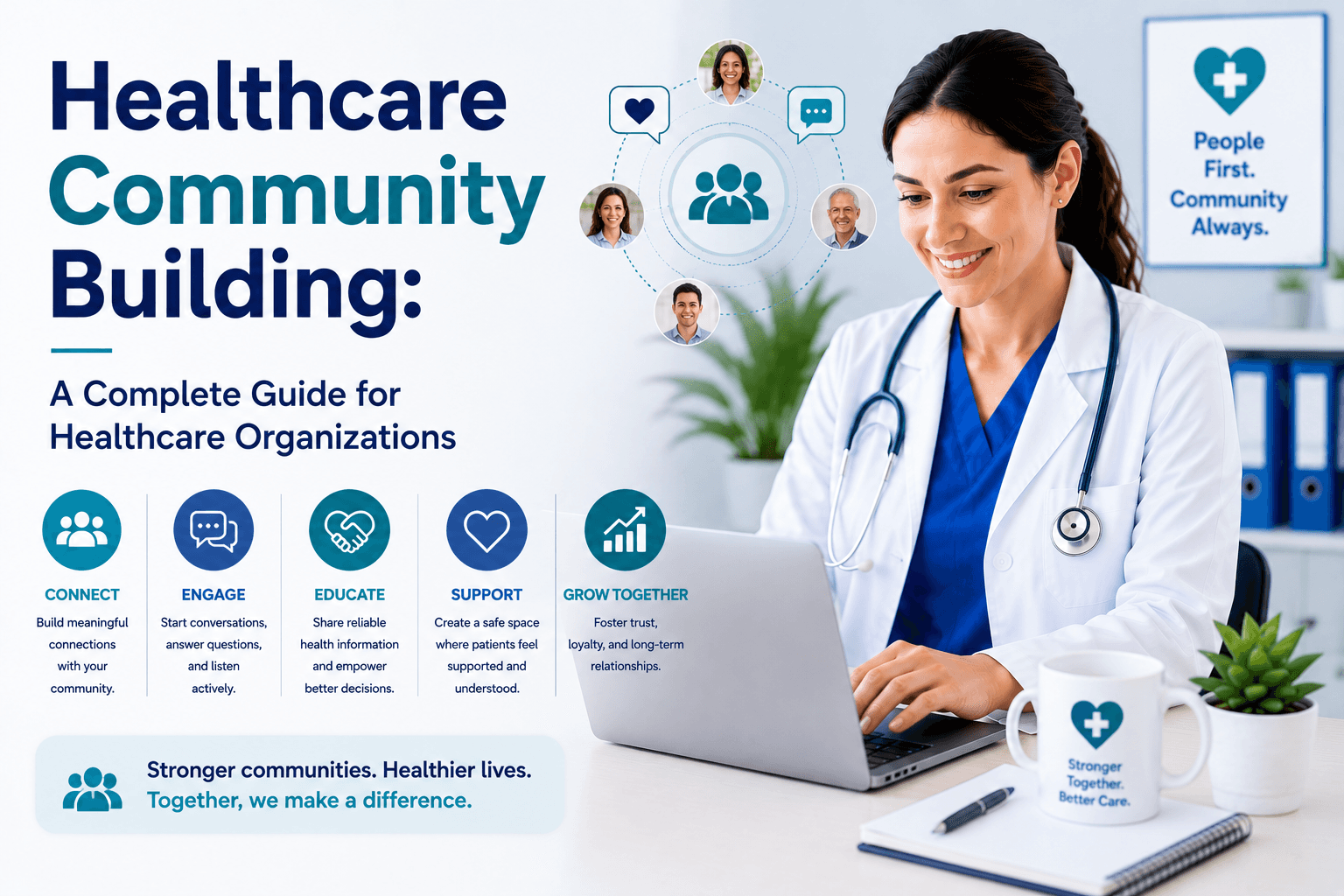
Most healthcare organizations have followers. Very few have communities.
Followers scroll past posts. Community members comment, share, and respond to each other. Followers consume content. Community members contribute to conversations. Followers can disappear overnight when a platform algorithm changes. Community members stick around because they are connected to something larger than any single post.
Healthcare community building transforms passive audiences into engaged groups of patients, caregivers, and community members who support each other and strengthen their connection to your organization. It is the difference between having people who see your content and having people who care about your content.
This guide covers how to build that kind of community. Practical strategies. Real examples. A framework your organization can start implementing this week.
Key Takeaways
Healthcare community building creates spaces where patients, caregivers, and community members connect with each other, not just with your organization.
Communities form around shared experiences, health conditions, geographic connections, or common interests rather than around institutions themselves.
Healthcare community management requires clear guidelines, consistent moderation, and genuine organizational commitment to participant wellbeing rather than marketing objectives.
Different platforms support different community types. Facebook Groups work for condition-specific support. Instagram builds connection through shared stories. Private communities serve sensitive health topics.
Healthcare patient communication within communities must balance openness with HIPAA compliance, protecting individual privacy while fostering group connection.
The strongest healthcare communities develop their own culture and leadership over time, with members supporting each other independently of organizational involvement.
Community success is measured by participation depth, member retention, and peer-to-peer interaction rather than audience size or post reach.
What Healthcare Community Building Actually Means
Healthcare community building is the intentional work of creating and nurturing spaces where patients, caregivers, community members, and healthcare organizations interact meaningfully around shared health interests, conditions, or geographic connections.
This differs fundamentally from audience building. An audience receives content. A community creates connection. An audience has a one-to-many relationship with your organization. A community has many-to-many relationships among its members.
Understanding this distinction changes how you approach everything. Content strategy shifts from broadcasting information to facilitating conversation. Measurement shifts from reach and impressions to participation and connection depth. Success becomes about what community members do with each other, not just what they do with your content.
Healthcare community management is the ongoing work of maintaining these spaces. It includes moderating discussions, enforcing guidelines, facilitating connections, responding to concerns, and ensuring the community remains safe and valuable for participants. This management function is essential. Communities left unmanaged rarely thrive and can become harmful.
Why Healthcare Communities Matter
Healthcare decisions are rarely made in isolation. Patients consult family members. They seek advice from others with similar conditions. They compare experiences with people who have undergone the same procedures. They look for emotional support during difficult diagnoses and treatments.
Healthcare communities provide these connections at scale. A diabetes management community connects newly diagnosed patients with people who have managed the condition for decades. A prenatal care community connects expectant parents navigating similar questions and concerns. A mental health community provides connection during moments when people feel most isolated.
For healthcare organizations, communities create distinctive advantages that traditional marketing cannot replicate. Community members develop deeper trust in organizations that facilitate genuine peer connection. They provide honest feedback about services and experiences. They become advocates who recommend your organization to others facing similar health situations. They maintain connection between clinical visits, supporting treatment adherence and healthy behaviors.
There is also a strategic dimension. Organizations that build genuine communities develop relationships that are difficult for competitors to replicate. A hospital that facilitates active condition-specific support communities has patient relationships that extend beyond any individual clinical encounter. These relationships influence provider choice, treatment decisions, and organizational loyalty.
Types of Healthcare Communities
Different community structures serve different purposes. Understanding the options helps you build what your patients need.
Condition-Specific Support Communities
These communities connect people managing the same health condition. Diabetes support groups. Cancer survivor networks. Chronic pain management communities. Post-surgical recovery groups.
Condition-specific communities provide practical advice from lived experience, emotional support during difficult periods, and the reassurance that comes from connecting with others who truly understand. They are particularly valuable for chronic conditions where ongoing management depends heavily on patient behavior between clinical visits.
These communities work well in private or semi-private settings. Facebook Groups. Dedicated community platforms. Hospital-facilitated support groups moved online. The privacy encourages openness that public social media spaces do not.
Geographic Health Communities
Geographic communities connect people around local health resources, events, and concerns. Neighborhood health discussion groups. Community wellness challenges. Local public health information networks.
These communities strengthen ties between healthcare organizations and the geographic areas they serve. They provide channels for community health communication. They surface local health concerns early. They build the kind of community trust that influences hospital choice and health behavior.
Public social media platforms work well for geographic communities. Facebook community pages. Nextdoor presence. Local Instagram community accounts. The public nature matches the community-wide focus.
Event-Based and Time-Limited Communities
Some communities form around specific health events or time periods. A community for people training together for a hospital-sponsored 5K. A prenatal class cohort that stays connected through pregnancy and early parenthood. A cardiac rehab group that supports each other through recovery.
These communities have natural starting and ending points. They are often easier to launch and manage than ongoing communities. They can also transition into longer-term communities when participants want continued connection.
Professional and Referral Communities
Not all healthcare communities serve patients directly. Professional communities connect referring providers, clinical colleagues, and healthcare professionals around shared interests.
LinkedIn groups for referring physicians. Professional networks for clinical specialists. These communities strengthen referral relationships and professional reputation in ways that support organizational growth.
Building a Healthcare Community from Scratch
Communities require different launch approaches than audiences. Here is a framework for starting well.
Start With a Clear Purpose
Communities form around shared interests, not around organizations. Your community needs a purpose that matters to potential members independent of their relationship with you.
"Weekly diabetes management tips" is content marketing. "A place for people managing diabetes to share what works, support each other through challenges, and learn together" is a community purpose.
Define your community's purpose clearly before launching. What will members get from participation? What will they contribute? Why would someone join and stay? The answers to these questions guide every subsequent decision.
Identify and Invite Founding Members
Communities need critical mass to function. The earliest members establish norms, model participation, and create the activity that attracts additional members.
Identify potential founding members from your existing patient base, social media followers, or community partners. Invite them personally. Explain the community purpose. Ask for their participation during the launch period. Their early activity determines whether the community feels alive or empty to newcomers.
Establish Clear Guidelines
Community guidelines protect participants and set expectations for behavior. Healthcare communities need particularly thoughtful guidelines given the sensitive nature of health discussions.
Your guidelines should address privacy expectations, appropriate sharing of personal health information, respectful communication standards, moderation policies, and the distinction between peer support and medical advice.
Make guidelines visible and accessible. Reference them when moderating. Update them as the community evolves and new situations arise.
Facilitate Rather Than Dominate
Organizational involvement in healthcare communities requires restraint. Communities where the organization posts constantly and dominates discussion feel like marketing channels. Communities where the organization facilitates while members lead feel like genuine communities.
Your role is creating conditions for member connection. Post discussion prompts. Highlight member contributions. Connect people with similar experiences. Step in when guidelines are violated. Step back when members are connecting well independently.
This restraint can feel uncomfortable for marketing teams accustomed to controlling messaging. It is essential for community authenticity. Members participate in communities that feel like their space, not like your marketing channel.
For organizations building broader engagement strategies, the patient engagement on social media guide covers relationship-building approaches that complement community development.
Healthcare Community Management Essentials
Communities require ongoing management to remain healthy and valuable.
Active Moderation
Moderation keeps communities safe and productive. It includes removing spam and inappropriate content, enforcing community guidelines consistently, addressing conflicts between members, and monitoring for misinformation or harmful advice.
Healthcare community moderation requires particular attention to medical misinformation. Peer support communities naturally include members sharing what worked for them. This sharing can cross into medical advice that may be inappropriate or dangerous for others. Moderators need clear policies about what constitutes peer support versus medical advice and how to address the latter.
Moderation also includes recognizing when community members need professional help. Comments suggesting self-harm, severe mental health crisis, or medical emergencies require immediate response protocols. Moderators should know how to escalate these situations appropriately.
Consistent Organizational Presence
Communities need to know the organization is present and engaged without feeling like the organization dominates the space.
Establish a predictable presence rhythm. Daily monitoring for guideline violations and crisis situations. Regular participation in discussions. Weekly content that prompts conversation. Monthly events or featured discussions.
This consistency builds member confidence that the community is actively maintained while leaving plenty of space for member-led interaction.
Member Recognition and Elevation
Recognizing active community members strengthens participation and builds community culture.
Highlight helpful contributions. Thank members who welcome newcomers. Feature member stories with permission. Create opportunities for experienced members to support newer ones.
Over time, this recognition develops community leadership. Long-term members begin answering questions from newcomers. They model constructive participation. They reinforce community norms independently of organizational involvement. This member leadership is the sign of a maturing, sustainable community.
Content That Fuels Conversation
Community content differs from marketing content. It prompts discussion rather than delivering information. It asks questions rather than providing answers.
Effective community content includes discussion prompts about shared experiences, questions that invite diverse perspectives, opportunities for members to share expertise with each other, and celebration of member milestones and achievements.
The measure of success for community content is not how many people saw it. It is how many people responded and how many conversations it started among members.
HIPAA and Privacy in Healthcare Communities
Healthcare communities operate at the intersection of connection and confidentiality. Managing this tension requires clear policies and consistent practices.
Member Privacy Education
Community members often share personal health information without fully understanding the implications. Part of community management is helping members protect their own privacy.
Remind members that information shared in communities may be visible to others. Encourage them to share only what they are comfortable having associated with them. Provide guidance about protecting their own privacy while participating meaningfully.
Organizational Boundaries
Your organization's obligations under HIPAA apply to staff participating in community spaces. Staff should never share patient-identifiable information. They should not confirm whether specific individuals are patients. They should move conversations involving specific clinical situations to private, secure channels.
These boundaries can create awkward moments when community members ask direct questions about their care. Prepare response protocols that acknowledge the question while redirecting to appropriate private channels.
Platform Considerations
Different community platforms offer different privacy levels. Public platforms maximize reach but minimize privacy. Private groups offer more protection but limit discovery. Dedicated community platforms can offer the strongest privacy controls but require members to join another service.
Match platform choice to community sensitivity. A community health walking group can thrive on public platforms. A mental health support community needs private, moderated space. A cancer survivor network benefits from strong privacy controls that encourage openness.
For organizations managing community content across platforms, the healthcare social media strategy guide covers platform selection and content approaches.
Measuring Community Health
Community measurement differs from marketing measurement. Here is what to track.
Participation Metrics
Track active members over time. New members joining. Members participating at least weekly. Comments and posts per member. These metrics indicate whether the community is growing and whether members find it valuable enough to participate.
Connection Metrics
Track replies to member posts. Conversations with multiple participants. Mentions and tags among members. These metrics indicate peer connection strength, which is the core value proposition of community.
Retention Metrics
Track member retention over time. Members remaining active after six months. Members returning after periods of inactivity. These metrics indicate whether the community provides ongoing value or just initial novelty.
Health Metrics
Track guideline violations. Moderator interventions. Reports from community members. Conflict frequency. These metrics indicate community health and whether management practices are working.
Common Healthcare Community Building Mistakes
Learning from common failures improves your approach.
Building community around your organization rather than member needs. Communities that exist to serve organizational goals rather than member needs feel inauthentic and fail to attract participation.
Launching without a moderation plan. Communities without active moderation develop problems that drive members away. Plan moderation before launching.
Dominating conversation. Organizations that post too frequently and respond to every comment prevent member-to-member connection from developing.
Neglecting community guidelines. Communities without clear, enforced guidelines develop toxic dynamics that destroy value for participants.
Measuring success like a marketing campaign. Community success looks different than campaign success. Measure participation depth and connection quality rather than reach and impressions.
Abandoning communities when growth is slow. Communities grow through relationship development, not viral content. Patient, consistent investment produces results that accelerate over time.
Frequently Asked Questions
What is healthcare community building?
Healthcare community building creates spaces where patients, caregivers, and community members connect around shared health interests, conditions, or geographic ties. It differs from audience building by fostering peer-to-peer relationships rather than just organization-to-audience communication. Successful communities provide support, information exchange, and genuine human connection.
Why are online communities important for healthcare organizations?
Online communities extend patient support beyond clinical encounters. They provide peer connection that improves treatment adherence and emotional wellbeing. They build organizational trust through genuine service to patient needs. They create patient advocates who recommend your organization. They provide honest feedback that improves services.
What platforms work best for healthcare communities?
Facebook Groups work well for condition-specific support communities. Instagram supports visual storytelling and connection. Dedicated community platforms offer strongest privacy controls for sensitive health topics. LinkedIn serves professional healthcare communities. Platform choice should match community purpose, privacy requirements, and where target members already spend time.
How do you maintain HIPAA compliance in healthcare communities?
Educate members about protecting their own privacy. Never share patient-identifiable information. Do not confirm whether individuals are patients. Move clinical discussions to private, secure channels. Establish clear staff guidelines for community participation. Choose platforms with appropriate privacy controls for community sensitivity level.
How do you moderate a healthcare community?
Establish clear community guidelines. Monitor discussions consistently. Remove spam and inappropriate content. Enforce guidelines fairly. Address misinformation while respecting peer experience sharing. Recognize when members need professional help. Develop crisis escalation protocols for urgent situations. Balance organizational presence with member-led conversation.
How do you measure healthcare community success?
Track active member growth and retention. Measure peer-to-peer interaction frequency. Monitor conversation depth and connection quality. Track guideline adherence and community health indicators. Assess whether members report value from participation. Community metrics differ from marketing metrics. Participation depth matters more than reach.
How long does it take to build a healthcare community?
Meaningful communities typically require six to twelve months of consistent investment before developing self-sustaining member leadership and culture. Initial growth may be slow. Member relationships deepen over time. Patient, consistent management produces communities that strengthen for years rather than peaking quickly and declining.
Can small practices build healthcare communities?
Yes. Small practices can build intimate, highly engaged communities that larger organizations struggle to replicate. A solo practice might facilitate a condition-specific support group, host regular community health discussions, or build a neighborhood wellness community. Authenticity and personal connection matter more than scale.
Building Communities That Last
Healthcare community building succeeds when organizations commit to serving member needs rather than extracting marketing value. Communities thrive when participants feel genuinely supported, connected, and valued. They fail when they feel like marketing channels with community language.
Start with a clear purpose that matters to potential members. Invite founding participants who will model the culture you want to develop. Establish guidelines that protect and empower. Manage consistently while letting member leadership emerge. Measure what indicates genuine community health.
The organizations building the strongest healthcare communities share a common characteristic. They prioritize community member wellbeing above organizational marketing objectives. This commitment shows in every interaction. Members recognize it. They respond with trust, participation, and the kind of loyalty that no advertising campaign can generate.
For healthcare teams ready to build and manage communities alongside their broader social media presence, Sociali.ai provides a purpose-built healthcare platform for planning, scheduling, collaborating on, and managing community content across multiple channels. From discussion prompts to content calendars to team coordination, the platform supports the consistent presence that healthy communities require.
Free resource
Get the checklist


