The Truth About Healthcare Reputation Management on Social Media
|
8
min read

The Truth About Healthcare Reputation Management on Social Media
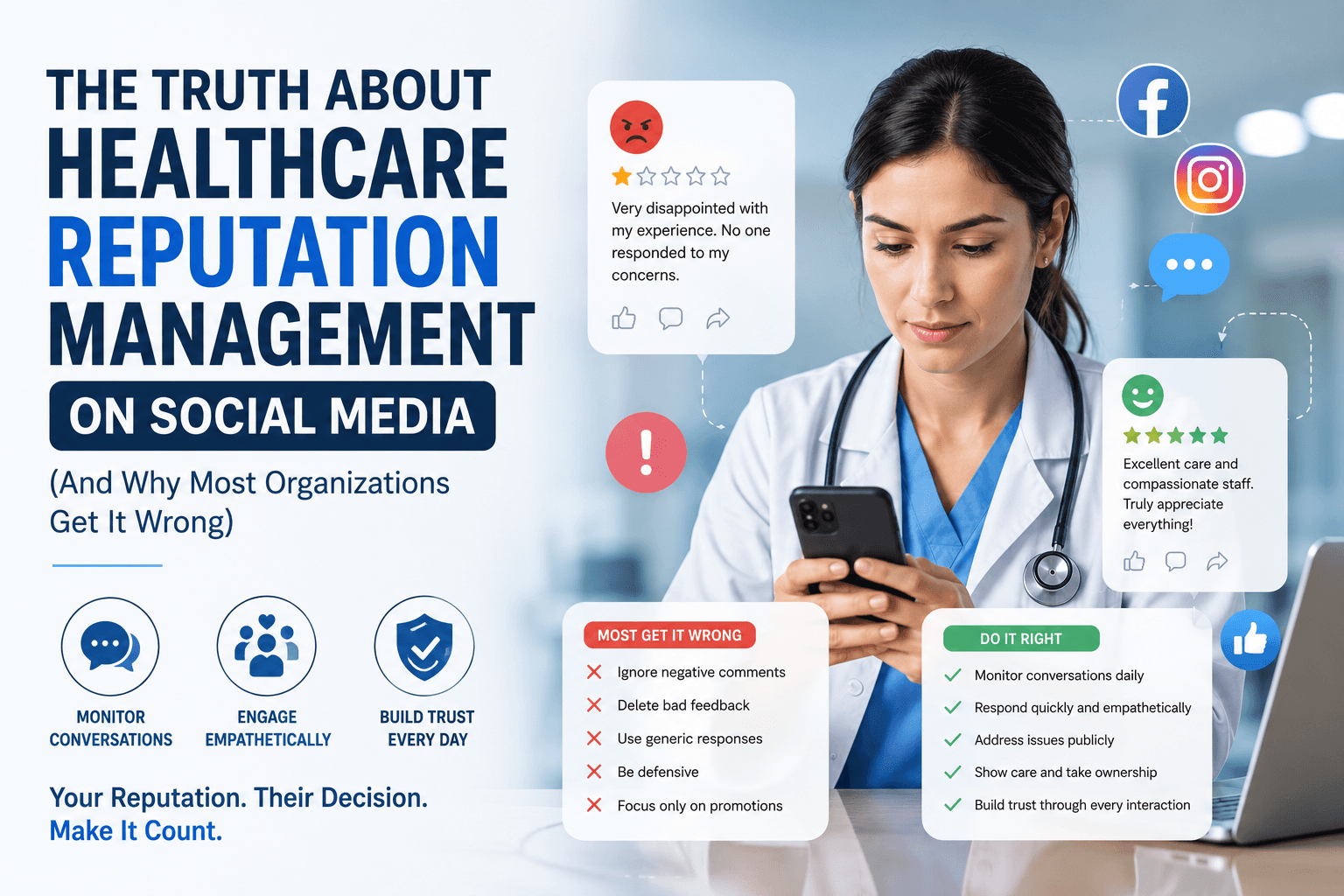
Most healthcare organizations treat reputation management like a fire extinguisher. Something you grab when there's already smoke.
A patient leaves a negative review. Suddenly leadership wants a plan. A competitor launches a glossy campaign. Marketing scrambles to catch up.
But reputation isn't built during emergencies. It's built in the quiet moments between crises, through thousands of small decisions about what you publish, how you respond, and whether you show up consistently.
And social media, despite what many healthcare executives still believe, is where most of that reputation building actually happens. A strong healthcare social media strategy isn't just about posting. It's about creating the conditions where trust grows naturally.
Key Takeaways
Healthcare reputation management on social media starts long before any negative comment appears. Consistency, educational content, and genuine community engagement form the foundation that protects your brand when challenges arise.
Patients evaluate healthcare providers through social media before ever booking an appointment. An abandoned Facebook page or outdated Instagram profile signals disorganization, not trustworthiness.
Compliance and strong social media presence are not opposites. Healthcare organizations can maintain HIPAA compliance while publishing engaging content, responding to comments, and building patient relationships online.
Content calendars, approval workflows, and clear social media governance prevent the mistakes that damage healthcare reputations. Most crises start with preventable errors, not malicious intent.
Healthcare brand management across multiple locations requires centralized strategy with localized execution. Patients expect consistent quality whether they visit your flagship hospital or a satellite clinic three towns over.
What Healthcare Reputation Management Actually Means in 2026
Healthcare reputation management isn't about suppressing negative feedback or gaming review sites. It's about the cumulative impression patients form when they encounter your organization online.
That impression gets shaped by your Google reviews, certainly. But also by your Instagram posts. Your response to a Facebook comment. The educational video a physician recorded. The way your team handled a public question about billing.
Social media amplifies all of it. A single thoughtful response to a patient's concern can reach thousands. So can a tone-deaf post that went through no approval process.
Organizations practicing strong healthcare brand management understand this connection. They know their social presence isn't separate from their reputation. It's the most visible expression of it. Effective healthcare social media marketing weaves reputation building into every post, every response, and every campaign.
A hospital that posts weekly health tips, shares provider spotlights, and responds warmly to comments builds trust incrementally. When someone searches their name, they find an active, engaged organization. That perception transfers to clinical credibility, even though the content isn't clinical.
Why Social Media Drives Patient Trust (Even When Patients Don't Comment)
Most patients never like, share, or comment on healthcare content. But they're watching.
Research on patient engagement consistently shows that people research healthcare providers online before making decisions. They scroll through feeds looking for signals. Is this practice current? Do they explain things clearly? Would I feel comfortable here?
A behavioral health center with a dormant Facebook page sends an unintended message: we're not really paying attention. A specialty clinic that posts irregularly, with varying visual quality, suggests operational inconsistency.
Neither of these organizations intended to communicate unreliability. But perception forms regardless of intent.
Healthcare social media management done well provides those signals deliberately. Regular posting demonstrates organizational health. Educational content demonstrates expertise. Thoughtful responses demonstrate care. Platforms like Sociali.ai versus Hootsuite or Buffer make this consistency achievable for healthcare teams that previously struggled with generic social media tools.
These signals matter especially for healthcare SMBs competing against larger systems. A small private clinic that publishes consistently useful content can build more trust than a major hospital with scattered, impersonal posts.
The Reputation Risk of Inconsistent Social Media
Most healthcare reputation damage isn't caused by scandal. It's caused by inconsistency.
A dental clinic creates social profiles across five platforms. They post enthusiastically for three weeks. Then patient volume increases, someone gets busy, and the accounts go quiet for four months.
New patients discovering that clinic see the gap immediately. They wonder if the practice is still operating. They notice the unanswered comments from months ago. They move on to a competitor whose Instagram feels alive.
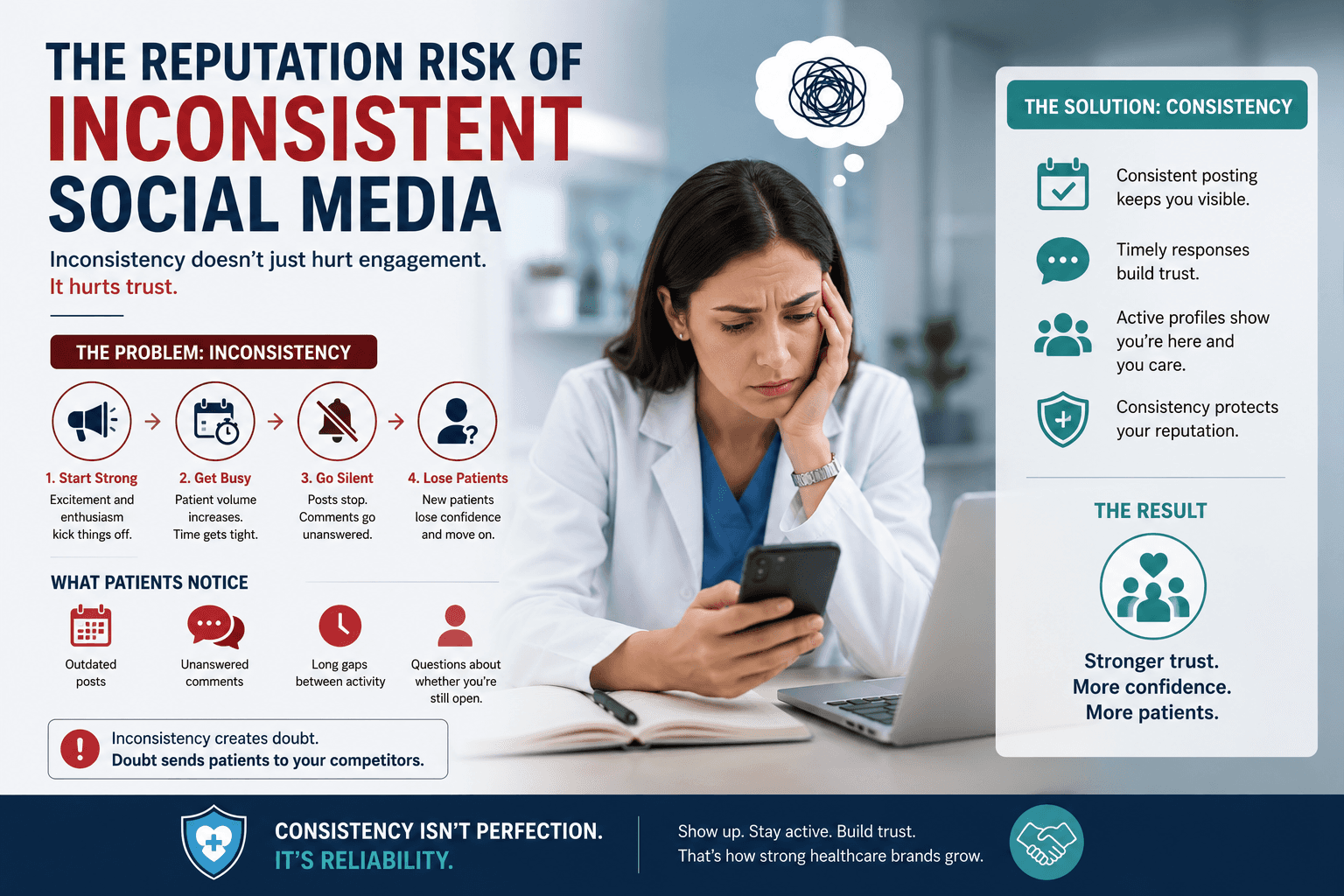
This pattern repeats across healthcare organizations of every size. The initial enthusiasm fades. Without systems for content planning and team collaboration, social media becomes an afterthought until reputation problems force attention back to it.
Healthcare brand consistency isn't about perfection. It's about reliability. Patients forgive an occasional typo. They don't forgive the impression that nobody's home.
For organizations managing multiple locations, inconsistency compounds. One location posts daily while another hasn't updated in six months. Patients don't distinguish between the two experiences. They associate both with the parent brand. Learning how to manage 10 locations on social media without an agency becomes essential for multi-location healthcare organizations that want consistent reputation signals across every community they serve.
Educational Content: The Most Underrated Reputation Tool
When healthcare organizations think about social media reputation, they usually think about damage control. Responding to complaints. Managing crises.
But the strongest reputation protection happens through patient education.
Every time a hospital publishes content that helps someone understand a health condition, make a better decision, or feel less anxious about a procedure, they're building reputation capital. That capital doesn't disappear when a negative review appears.
Healthcare content marketing through social channels positions your organization as a resource, not just a service provider. Patients begin to trust your information. They share it. When they need care, your organization already occupies that trusted position. A thoughtful healthcare content marketing approach ensures every post serves a purpose beyond filling space in the calendar.
A healthcare system sharing clear, empathetic content about mammogram preparation isn't just doing community outreach. They're demonstrating competence and compassion simultaneously. A private practice explaining insurance terminology in plain language isn't just being helpful. They're showing patients what kind of experience to expect.
This approach requires healthcare content strategy, not random posting. Organizations need to identify what patients actually want to know, create content that answers those questions, and publish it consistently. Caption ideas matter too. Healthcare teams looking for inspiration can reference 15 Instagram caption ideas for healthcare posts that maintain professionalism while sounding human.
Healthcare Community Engagement That Builds Trust
Engagement intimidates many healthcare organizations. The fear of HIPAA violations, negative comments, or saying something wrong keeps them silent.
But silence on social media communicates something too. It communicates distance. Disinterest. The opposite of patient-centered care.
Healthcare community management doesn't require answering medical questions publicly. It requires acknowledging people. Thanking them for positive feedback. Directing specific concerns to appropriate channels. Showing that real humans operate the account.
A hospital that responds to a patient's "thank you" comment with genuine warmth reinforces every claim they make about compassionate care. A specialty clinic that handles a scheduling complaint professionally, offering to help through direct message, demonstrates accountability.
These interactions are visible to everyone watching. They shape reputation more than any marketing copy could.
Patient communication through social channels also creates opportunities. When patients comment with questions about services, hours, or what to expect, your responses serve as public FAQ content. Each answer helps future patients while demonstrating responsiveness.
Handling Negative Comments: The Framework Healthcare Teams Need
Every healthcare organization eventually faces public criticism. The question is whether they have a framework for responding.
Without preparation, teams either ignore negative comments (which communicates indifference) or respond defensively (which escalates the situation). Both outcomes damage reputation.
A better approach:
First, acknowledge quickly. Not with a resolution. Just with recognition. "We hear you and want to understand more" buys time while demonstrating attention.
Second, move the conversation offline. Provide a direct contact method. Never discuss patient details publicly. This isn't just good practice. It's essential for healthcare compliance and patient privacy.
Third, follow through. If you promised someone would contact them, ensure it happens. The follow-through, or lack of it, becomes part of the reputation story.
Fourth, address patterns. If multiple comments raise the same concern, that's not a social media problem. It's an operational problem that needs internal attention.
Healthcare crisis communication on social media follows similar principles but with greater urgency. Organizations need pre-approved messaging templates, clear approval chains, and the ability to publish accurate information quickly when situations develop.
Common Healthcare Social Media Mistakes That Damage Reputation
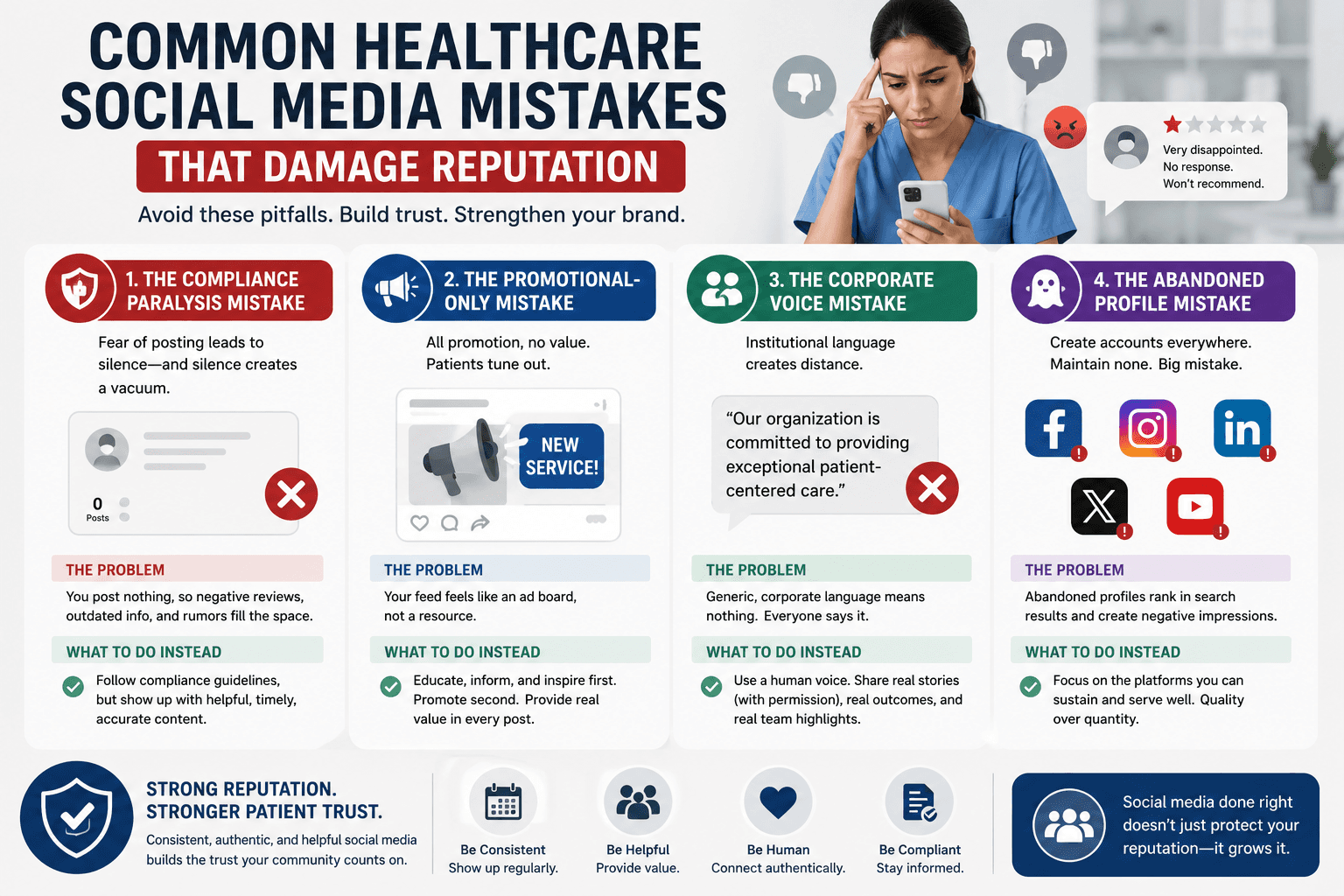
The Compliance Paralysis Mistake
Some organizations post nothing because they're afraid of posting the wrong thing. This creates a vacuum that negative reviews and outdated information fill. Healthcare compliance guides what you say and how you handle information. It shouldn't prevent you from saying anything at all.
The Promotional-Only Mistake
Practices that use social media exclusively for announcing new services, new equipment, and new providers miss the point entirely. Patients don't follow healthcare organizations to receive advertising. They follow to learn, to feel connected, to understand their health better. Promotional content has its place. But it shouldn't dominate the feed.
The Corporate Voice Mistake
Healthcare communications written in institutional language create distance. "Our organization is committed to providing exceptional patient-centered care" means nothing because everyone says it. Specific stories about specific patients (with consent), specific outcomes, and specific team members mean everything.
The Abandoned Profile Mistake
Creating accounts on every platform and maintaining none of them is worse than maintaining a strong presence on one platform. Abandoned profiles rank in search results and create negative impressions. Organizations should focus on platforms they can sustain rather than spreading too thin.
Social Media Governance and Approval Workflows
Healthcare organizations protecting their reputation need clear social media governance. This doesn't mean bureaucratic paralysis. It means documented processes that let teams move quickly while staying within appropriate boundaries.
Effective governance addresses several questions:
Who can publish on behalf of the organization? Which content requires approval before publishing? What's the process for urgent or time-sensitive posts? How do we handle comments that raise clinical questions? What's the escalation path when someone is uncertain?
Internal approval workflows benefit from tools that let reviewers see exactly what will publish, comment internally, and approve or request changes without email chains. Healthcare teams using social media management platforms designed for their needs move faster while maintaining appropriate oversight. A complete guide to healthcare social media management covers these workflow considerations in detail.
Brand voice consistency across team members, departments, and locations requires guidance documents. Not rigid scripts that make everyone sound robotic. Just clear principles about tone, language, and what your organization sounds like when it's at its best.
Managing Multiple Healthcare Locations Without Reputation Drift
Multi-location healthcare organizations face a unique challenge. Each location develops its own reputation, but all locations affect the parent brand.
A patient who has a poor experience at one clinic location may hesitate to visit another location under the same brand, even if that second location is excellent. The reputations are connected whether organizations acknowledge it or not.
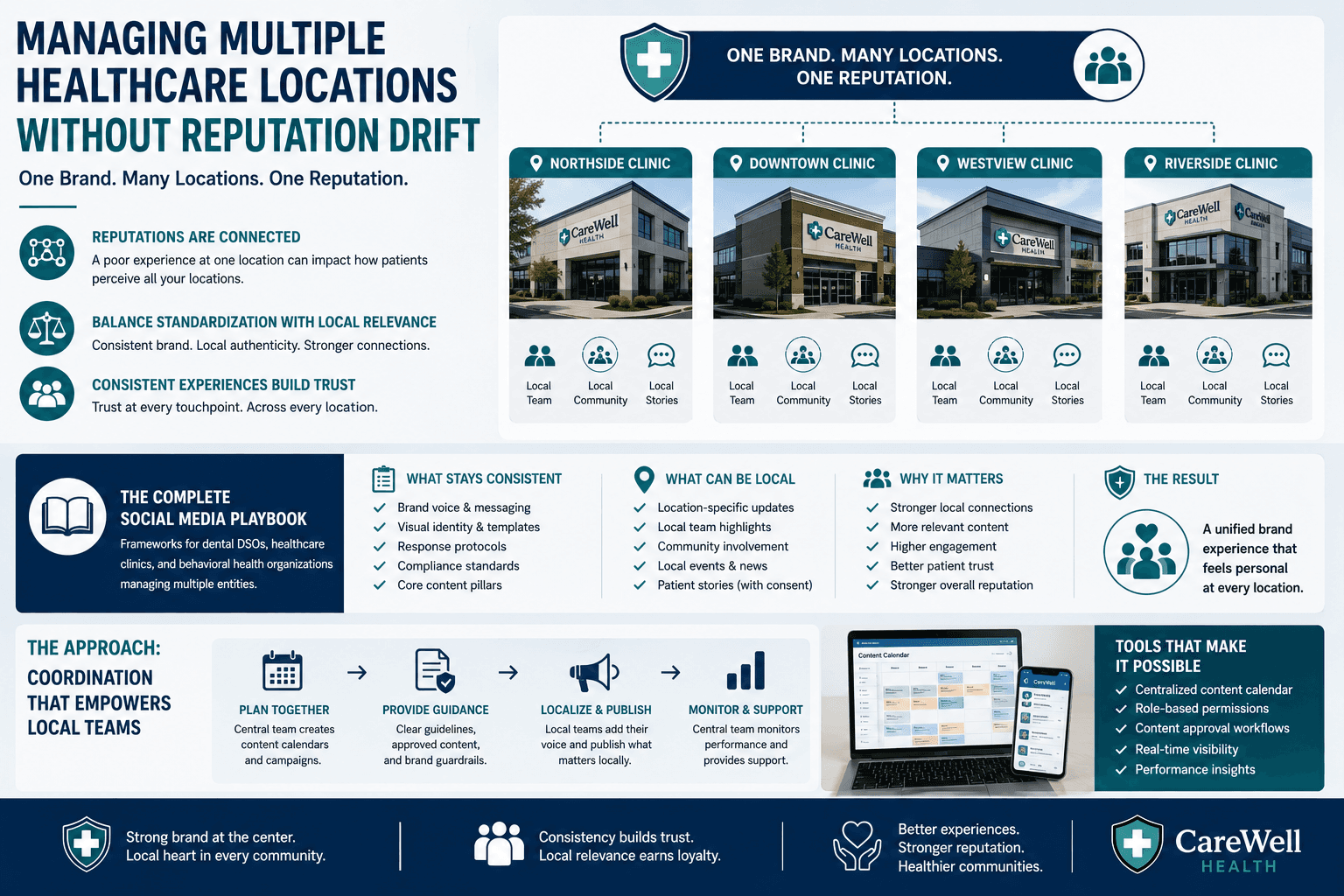
Healthcare social media management across locations requires balancing standardization with local relevance. Centralized content calendars ensure consistent messaging. Local teams need flexibility to share location-specific updates, highlight their own team members, and engage with their own community. The complete social media playbook for dental DSOs, healthcare clinics, and behavioral health organizations provides frameworks specifically for multi-entity healthcare groups navigating this challenge.
Brand voice guidelines apply everywhere. Visual identity applies everywhere. Response protocols apply everywhere. But the content itself should feel authentic to each location's team and patients.
This approach requires coordination tools that give central marketing visibility into local publishing while giving local teams autonomy within clear parameters.
Measuring What Matters: Social Media KPIs for Reputation
Healthcare social media analytics typically focus on vanity metrics. Likes, follows, reach. These numbers matter somewhat, but they don't measure reputation.
Organizations serious about healthcare reputation management track different indicators.
Response rate and response time for comments and messages indicate how responsive patients perceive you to be. Sentiment trends over time show whether community perception is improving or declining. Content saves and shares indicate whether your educational content provides real value.
Comment themes deserve particular attention. Are patients consistently raising the same questions? Complementing the same providers? Expressing the same frustrations? These patterns reveal what your reputation actually consists of, beyond what you hope it is.
Healthcare organizations should also monitor what happens when they're not posting. Brand mentions, tags, and community discussions continue whether you participate or not. Awareness of these conversations informs strategy and identifies reputation issues before they escalate.
The Patient Engagement and Reputation Connection
Patient engagement and reputation are the same thing viewed from different angles.
Engaged patients feel connected to their healthcare providers. They trust recommendations. They follow care instructions more consistently. They refer friends and family. They return when they need additional care.
Social media creates opportunities for that engagement between visits. A physical therapy practice sharing home exercise tips keeps patients engaged with their recovery. A pediatric clinic sharing developmental milestone information keeps parents connected between well-child visits. A behavioral health center sharing coping strategies supports patients who may not have an appointment for weeks.
Healthcare social media marketing that prioritizes engagement over promotion builds the kind of loyalty that generates positive reviews naturally, withstands occasional criticism, and creates advocates who defend your reputation without being asked. Understanding how to create a healthcare social media strategy that drives patient engagement transforms social media from a broadcasting tool into a relationship-building channel.
A Practical Healthcare Social Media Reputation Checklist
For organizations ready to strengthen their reputation through social media:
Document your brand voice so every team member communicates consistently. Create a realistic content calendar based on what you can sustain, not what you hope to achieve temporarily. Establish approval workflows that maintain compliance without creating bottlenecks. Train every person with publishing access on response protocols for common scenarios. Schedule regular content review sessions to identify what's resonating and what isn't. Monitor comments and messages daily. Respond within a defined timeframe. Audit all social profiles quarterly. Remove or update outdated accounts. Align social content with broader patient education and community outreach goals. Celebrate team members publicly. Their expertise builds organizational credibility. Prepare crisis communication templates before you need them. Review and update them annually.
What's Changing in Healthcare Reputation Management
Several trends are reshaping how healthcare organizations approach social media reputation.
Video content continues gaining influence. Patients increasingly expect to see the faces behind their care, tour facilities virtually, and hear providers explain conditions in their own words. Organizations that resist video will find text and stock photography increasingly inadequate for building trust.
Community management expectations keep rising. Patients who message healthcare organizations expect timely responses, not automated acknowledgments that lead nowhere. Organizations need staffing models that support genuine responsiveness.
AI tools are changing content creation and analytics, but the healthcare social media presence that builds reputation still requires human judgment, empathy, and decision-making. A practical guide to AI healthcare marketing explores where technology helps and where human oversight remains essential. Technology supports consistency and efficiency. It doesn't replace the human connection patients seek.
Healthcare transparency expectations continue expanding. Patients want to understand costs, wait times, outcomes, and what to expect. Organizations that share information proactively build trust faster than those that wait to be asked.
Frequently Asked Questions
How does social media affect a healthcare organization's reputation?
Social media shapes first impressions, patient trust, and long-term brand perception. When potential patients search for healthcare providers, they encounter social profiles alongside websites and reviews. Active, educational, responsive profiles signal reliability. Inactive or unprofessional profiles create doubt about organizational competence and patient care quality.
What's the difference between healthcare reputation management and review management?
Review management focuses specifically on monitoring and responding to online reviews across platforms like Google, Healthgrades, and Yelp. Healthcare reputation management is broader. It encompasses social media presence, patient communication, educational content, community engagement, brand consistency, and crisis response. Reviews are one component. They're not the whole picture.
Can healthcare organizations respond to negative comments without violating HIPAA?
Yes, by never discussing specific patient information publicly. Acknowledge the comment, express willingness to address concerns, and provide a direct contact method for private conversation. Standard responses like "We take your concerns seriously and want to learn more. Please contact our patient relations team at [number]" maintain compliance while demonstrating accountability.
How often should healthcare organizations post on social media?
Frequency depends on platform, audience, and organizational capacity. Most healthcare organizations benefit from posting three to five times weekly on primary platforms. Consistency matters more than volume. A predictable schedule that produces quality content builds more trust than sporadic bursts followed by silence. Choose a sustainable cadence and maintain it.
What social media platforms matter most for healthcare reputation?
Facebook and Instagram currently offer the strongest reputation-building opportunities for most healthcare organizations. LinkedIn matters for professional audiences and recruitment reputation. YouTube supports patient education and provider introductions. Platform selection should follow patient demographics and organizational goals, not trends.
How can small healthcare practices compete with large health systems on social media?
Small practices can leverage authenticity and personal connection. While large systems manage institutional brand voices, small practices can showcase individual providers, share patient education with genuine warmth, and respond to community comments personally. Consistent, helpful content from a solo practitioner often builds more trust than polished corporate content from a large system.
What should healthcare organizations include in their social media policy?
A comprehensive social media policy addresses who can publish on behalf of the organization, content approval processes, response protocols for comments and messages, HIPAA compliance requirements, brand voice and visual guidelines, crisis communication procedures, and consequences for policy violations. The policy should enable consistent, compliant activity rather than restrict it entirely.
How do you measure social media's impact on healthcare reputation?
Track response rates and response times, comment sentiment trends, content saves and shares (indicators of value), brand mention volume and sentiment, and correlation between social media activity and patient acquisition metrics. Qualitative indicators like comment themes and message types also reveal how community perception is evolving over time.
Building Reputation Through Consistency, Not Crisis Management
Healthcare reputation isn't built through heroic responses to emergencies. It's built through thousands of consistent decisions over months and years. What you publish. How you respond. Whether patients can count on finding useful, accurate, empathetic content when they look for you.
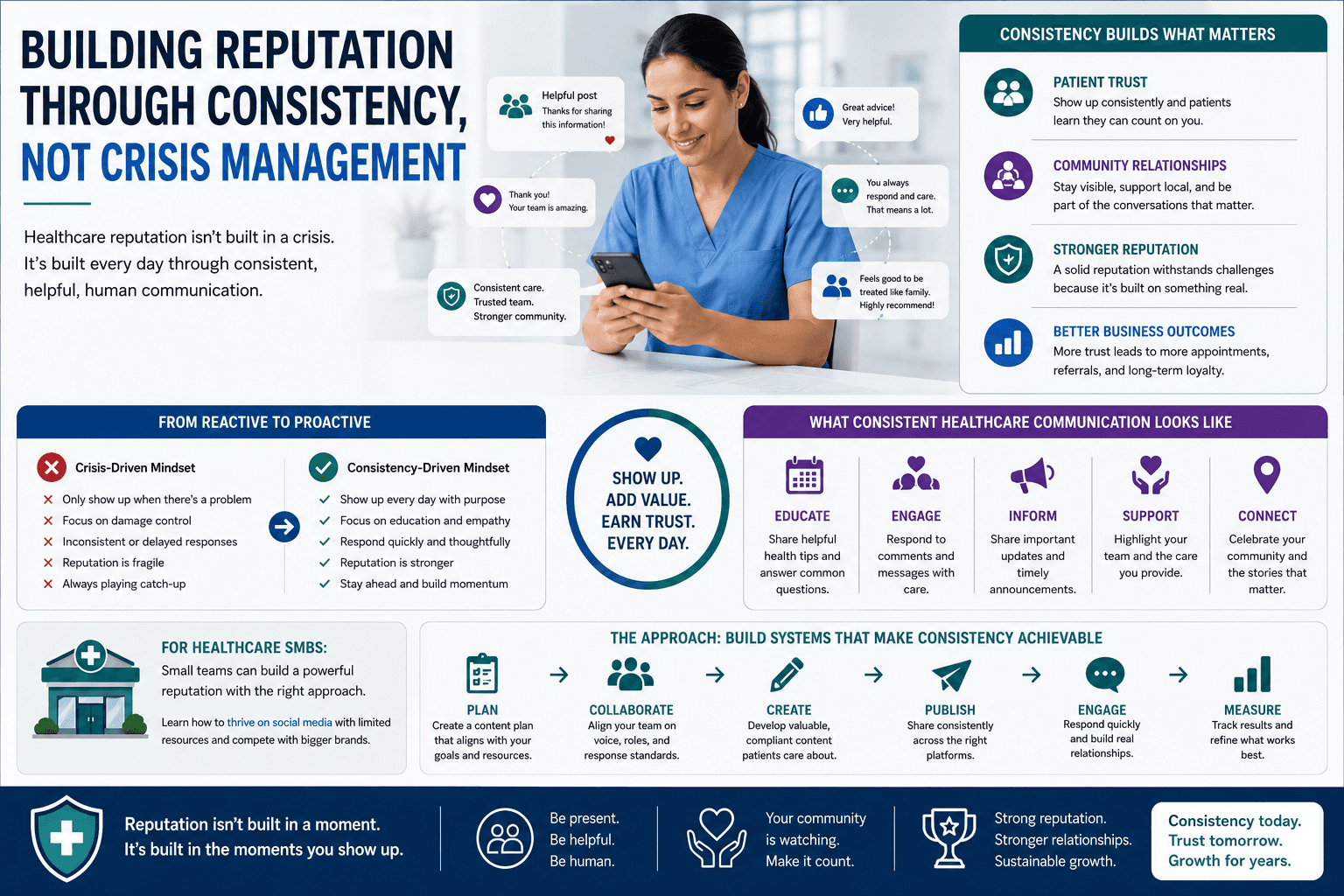
Organizations that understand this stop treating social media as a marketing afterthought. They integrate it into their broader strategy for patient communication, community engagement, and brand building. They create systems that make consistency achievable rather than aspirational. For healthcare SMBs especially, learning how to thrive on social media with limited resources makes the difference between building reputation and losing it to neglect.
The result isn't just better social media metrics. It's deeper patient trust, stronger community relationships, and a reputation that withstands challenges because it was built on something real.
For healthcare organizations ready to bring structure, consistency, and strategy to their social media presence across teams and locations, the Sociali.ai Healthcare Solution provides content planning, team collaboration, scheduling, publishing, and analytics tools purpose-built for healthcare workflows. Not reputation management software. A platform for creating the consistent, educational, engaging social presence that builds reputation naturally over time.
When your social media reflects your organization at its best consistently, patients notice. Trust follows.
Free resource
Get the checklist


